We love trees…
… but sometimes, unfortunately, they can outgrow their allotted spaces, threaten our structures, obscure views and overly shade gardens – depriving them of light, water and nutrients.
Trained in arboriculture (tree cultivation), in both theory and practically, we can assess your trees and determine what action is needed, if any, to help retain beneficial and beautiful trees, and remove any that are dangerous or unwanted.
Arboricultural or tree surgery operations, include:
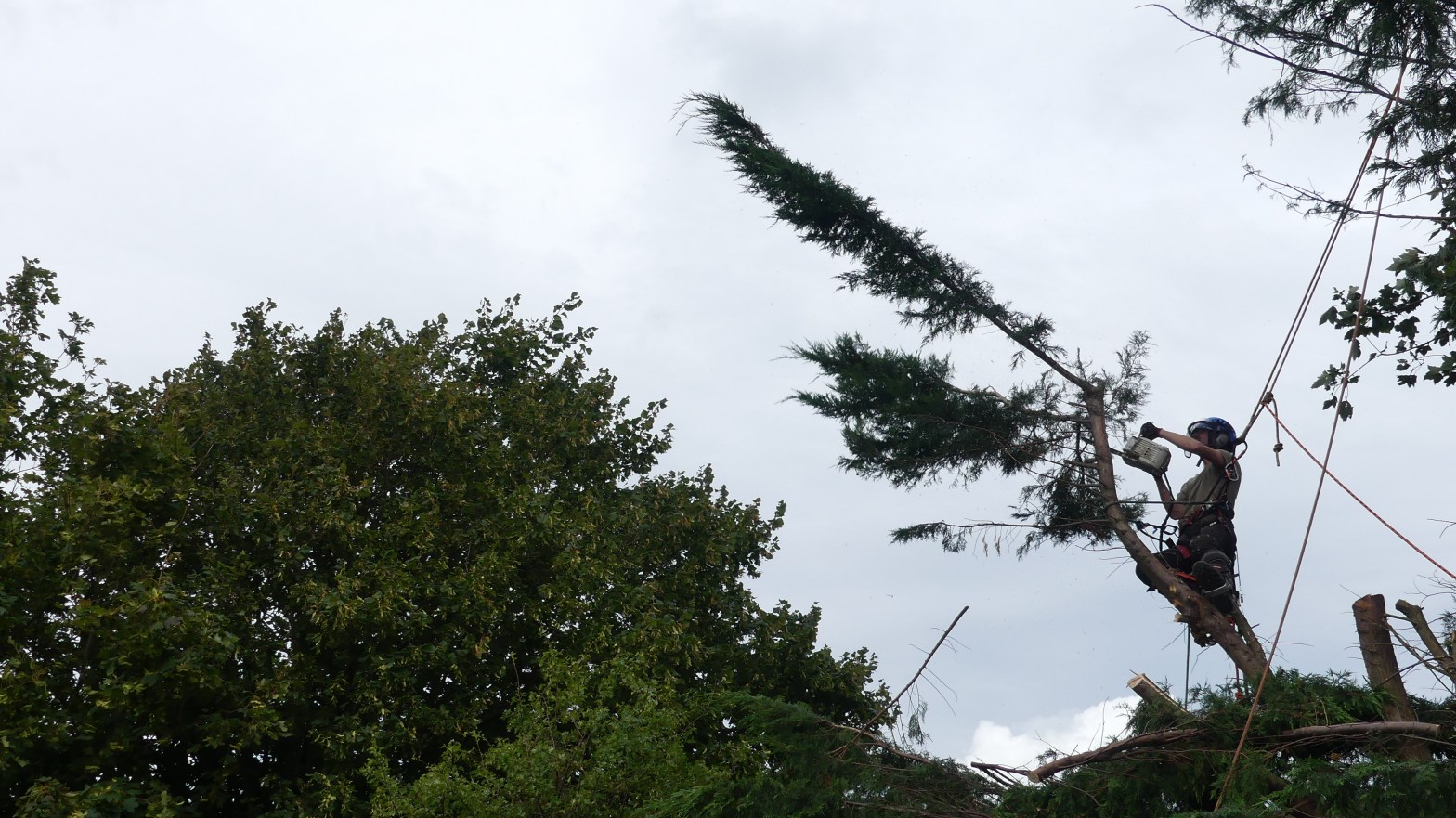
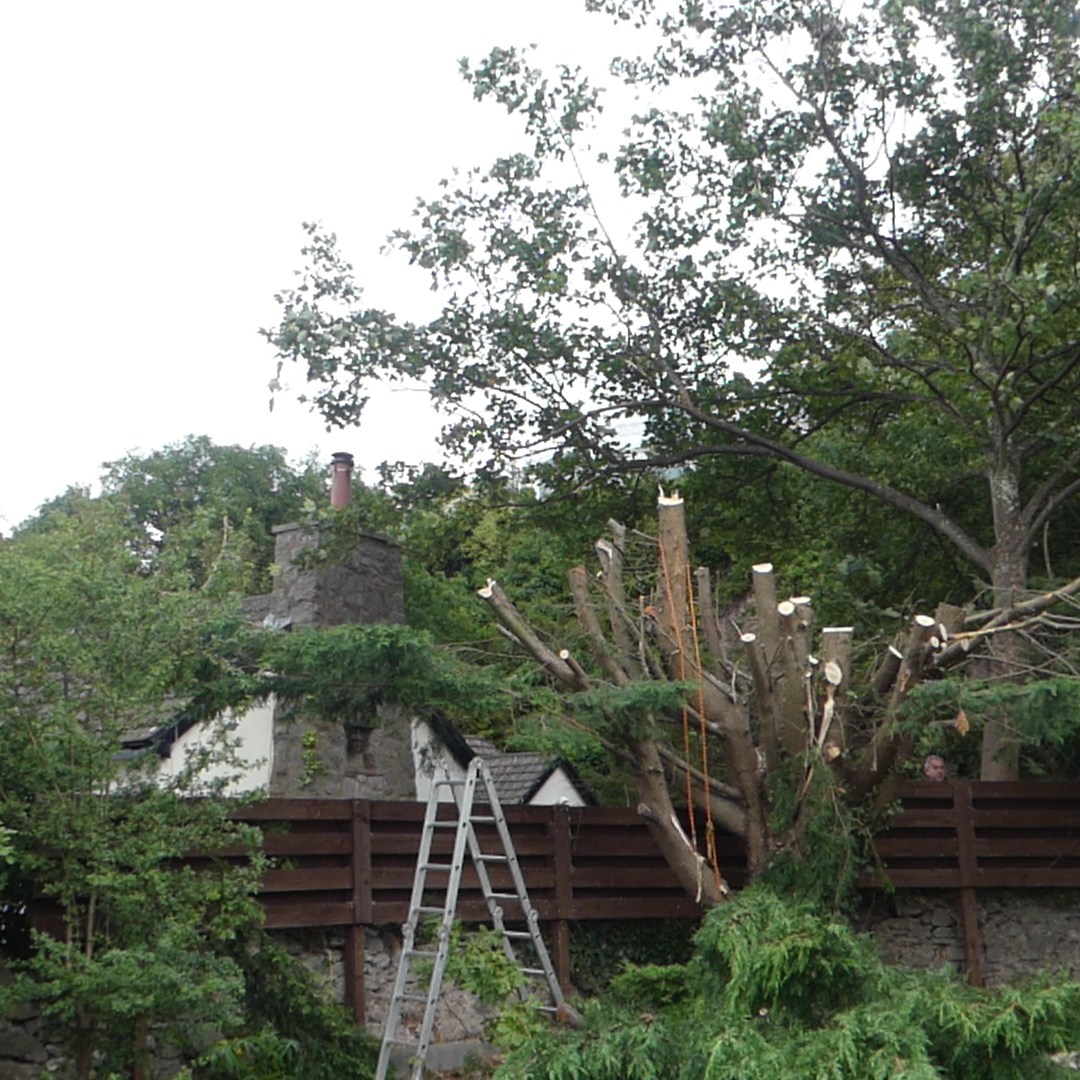
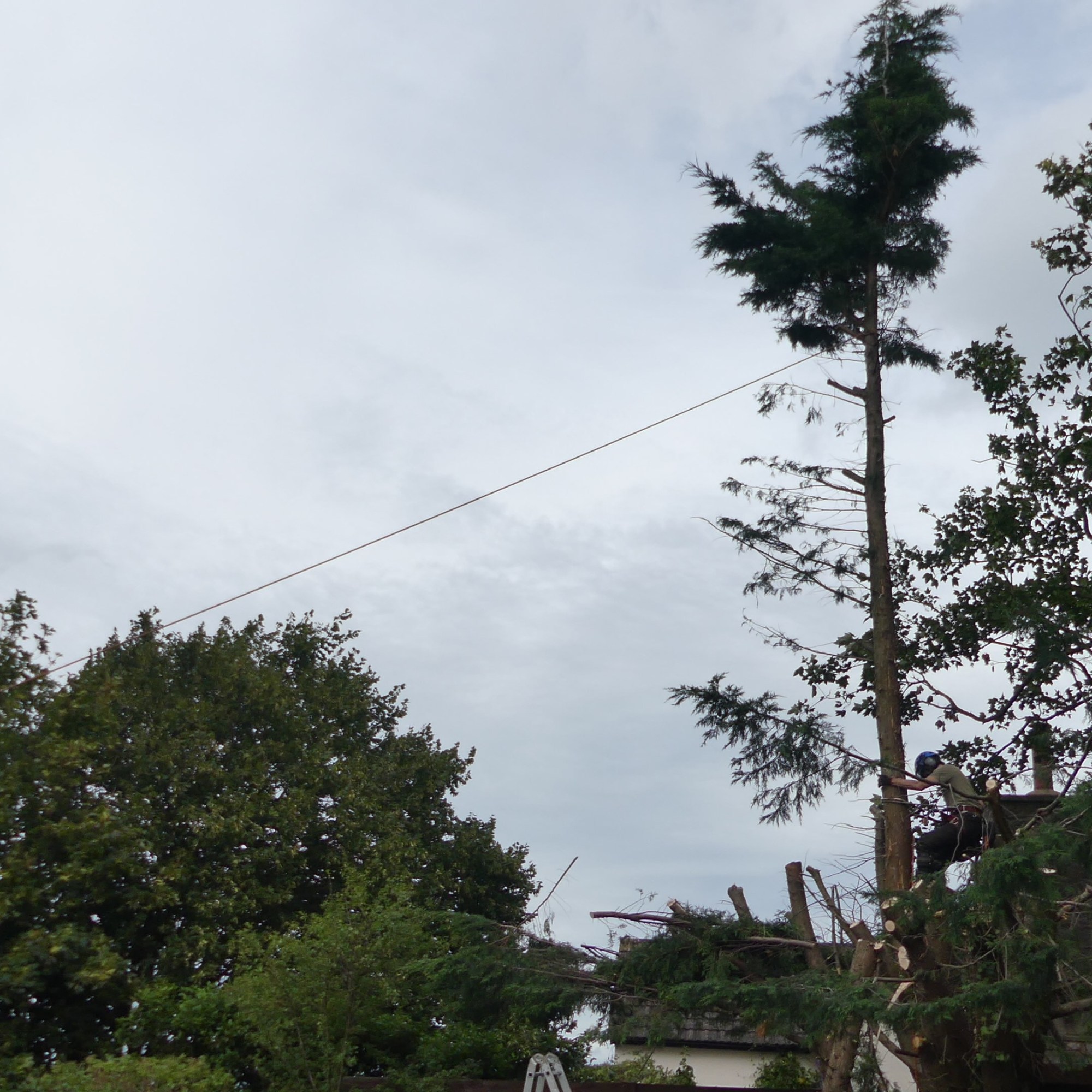
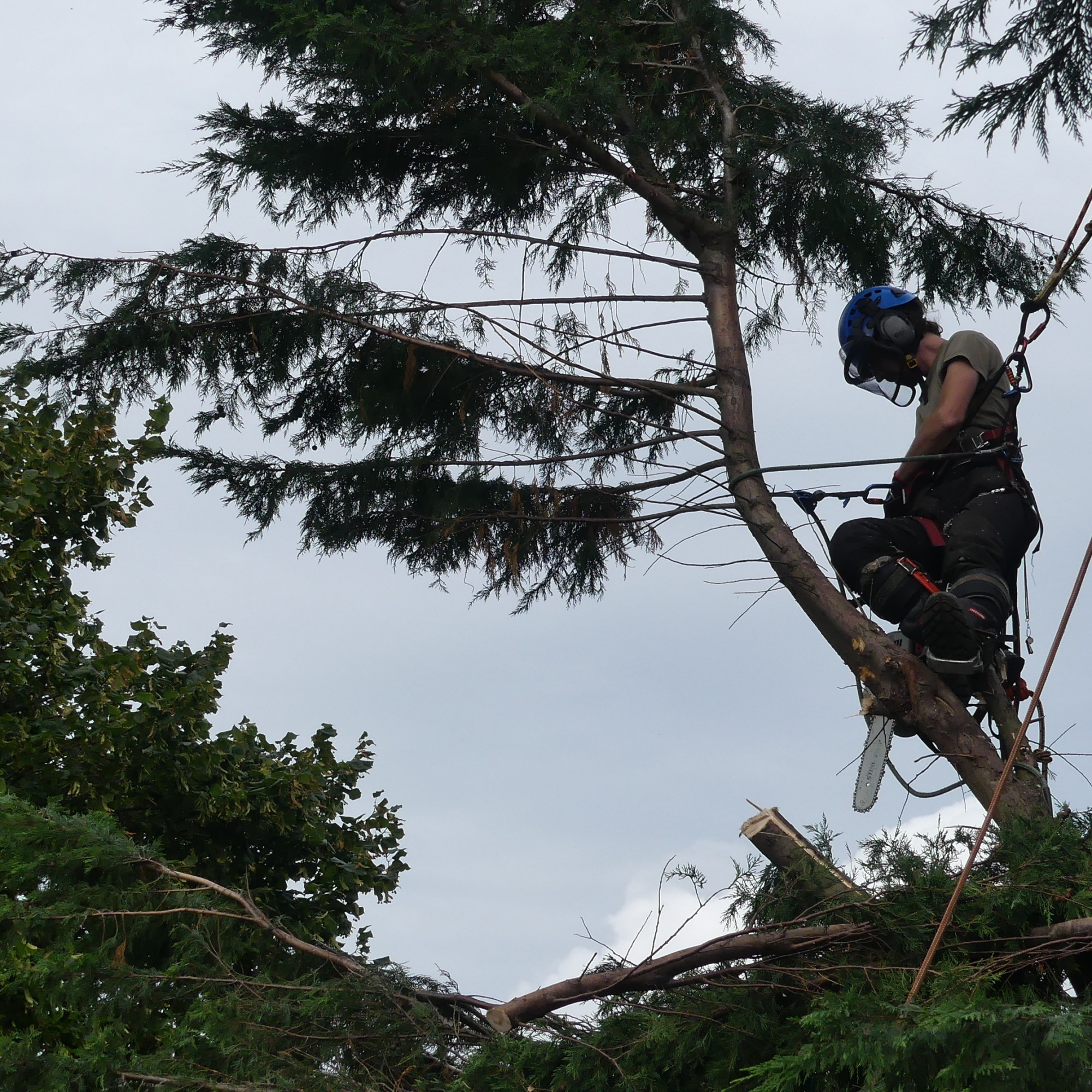
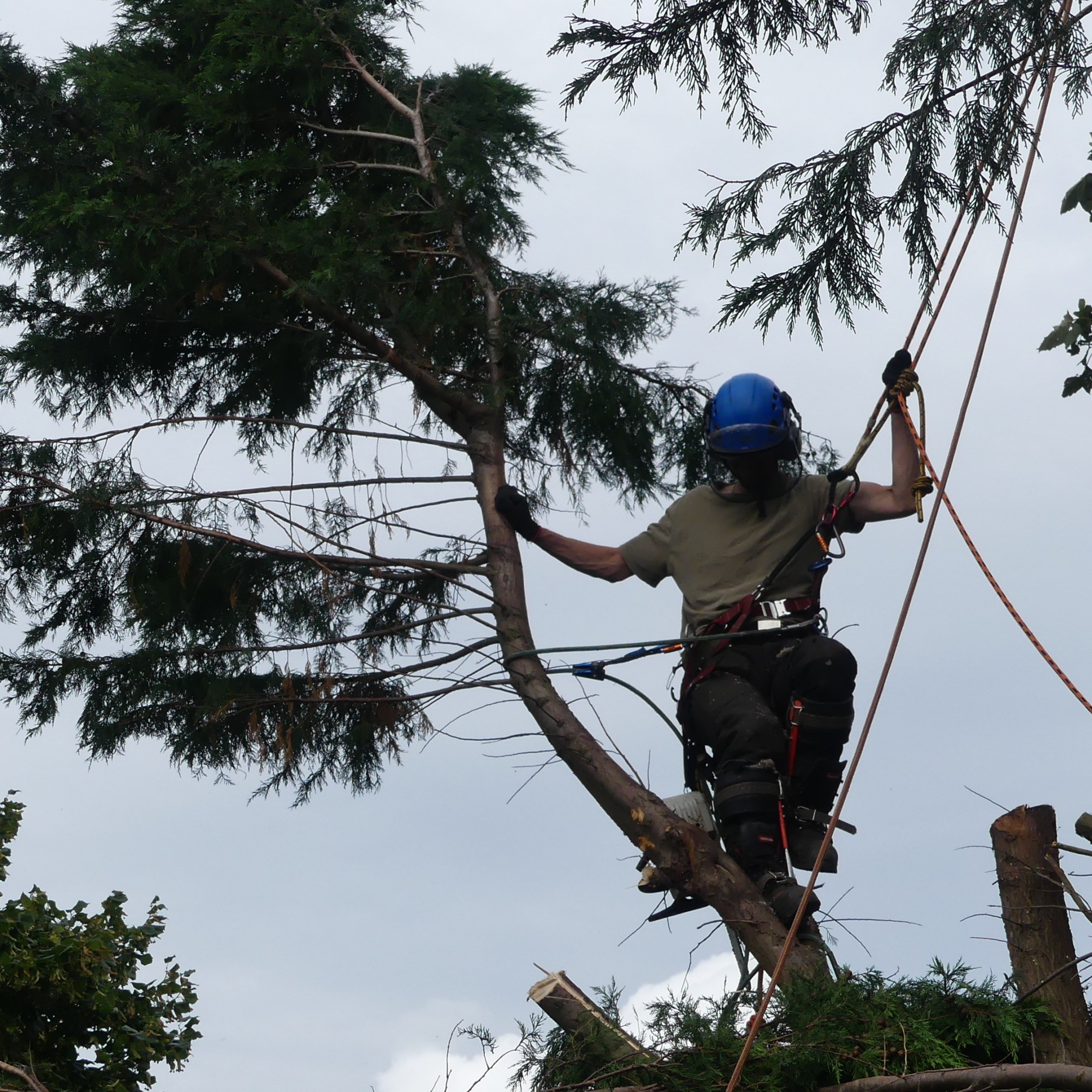
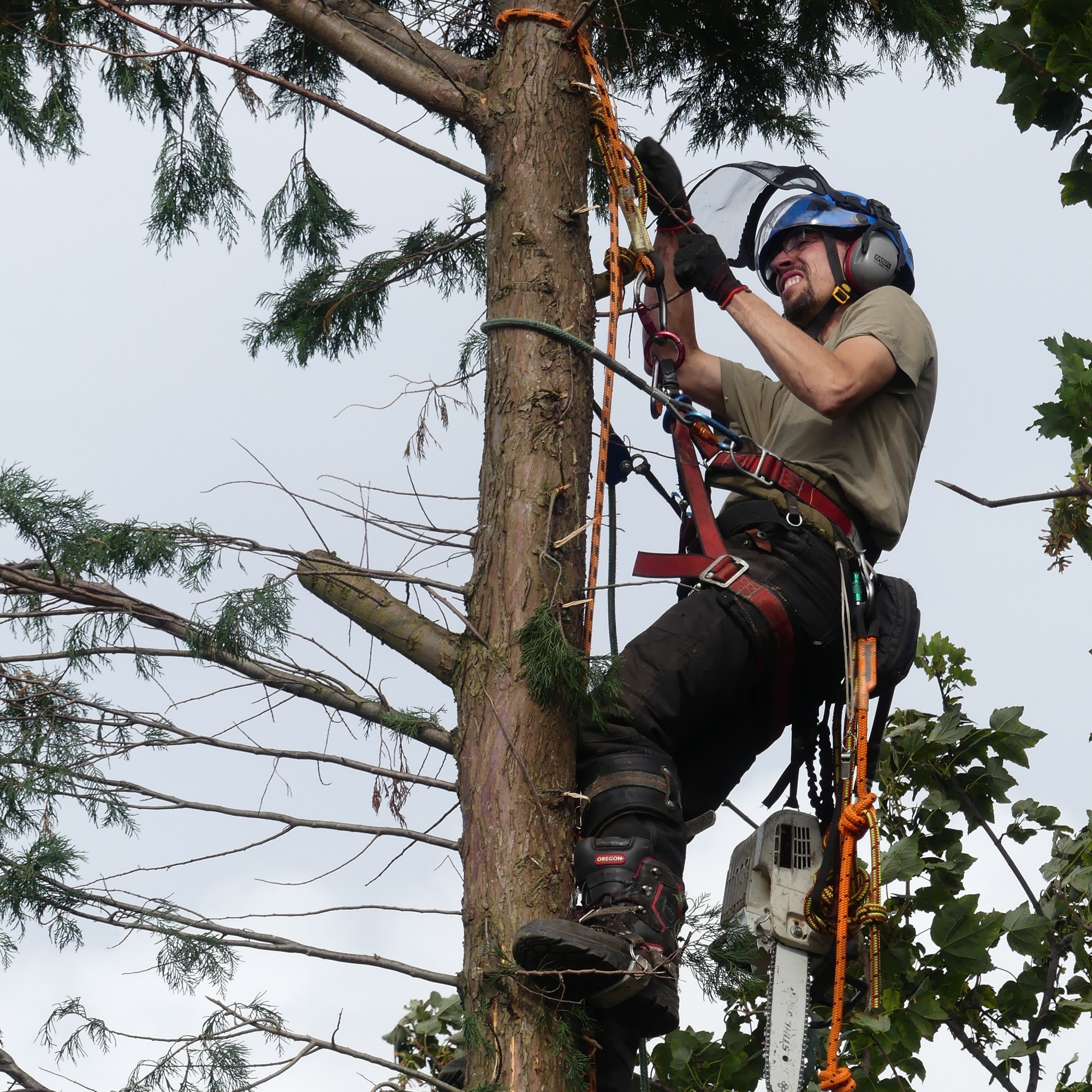
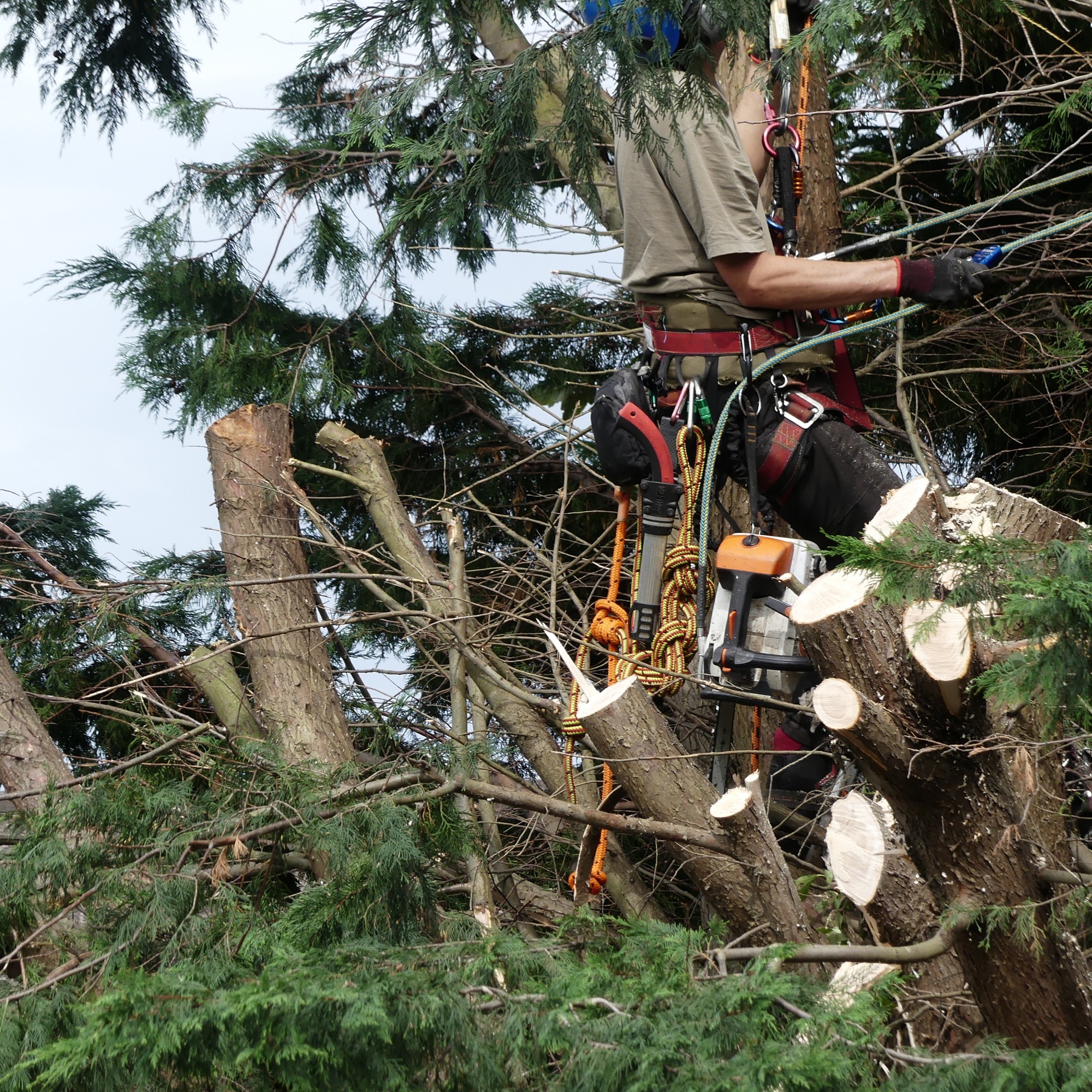
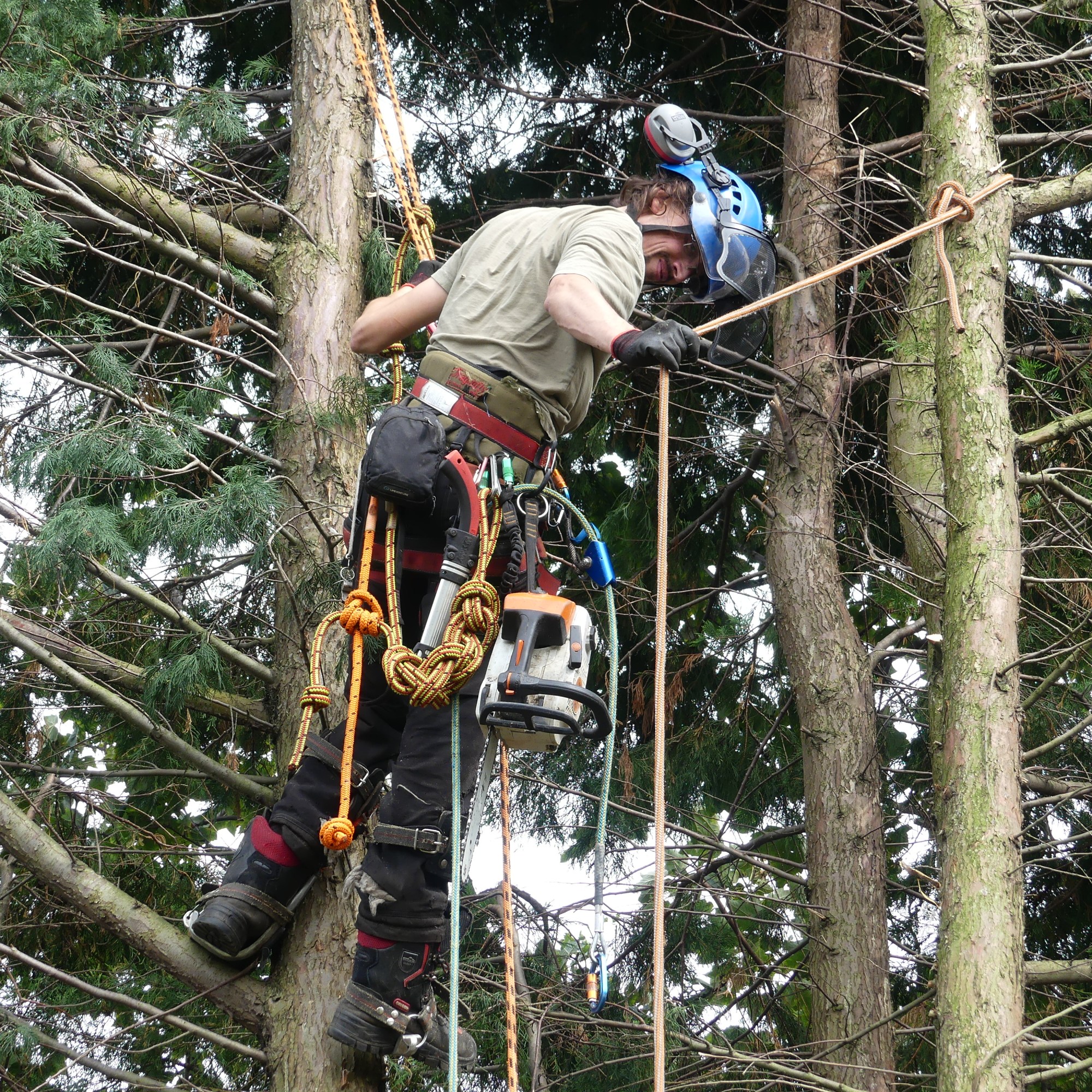
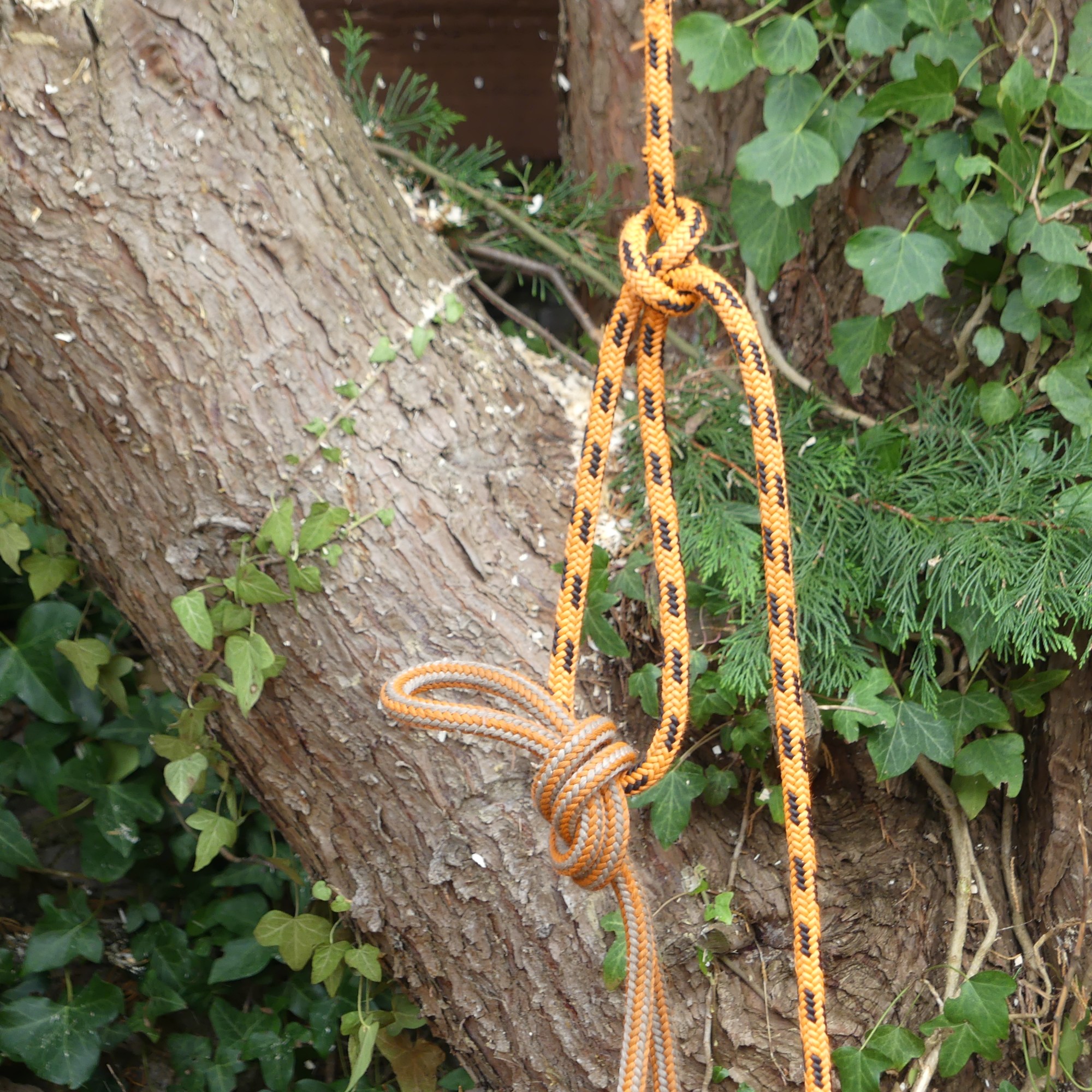
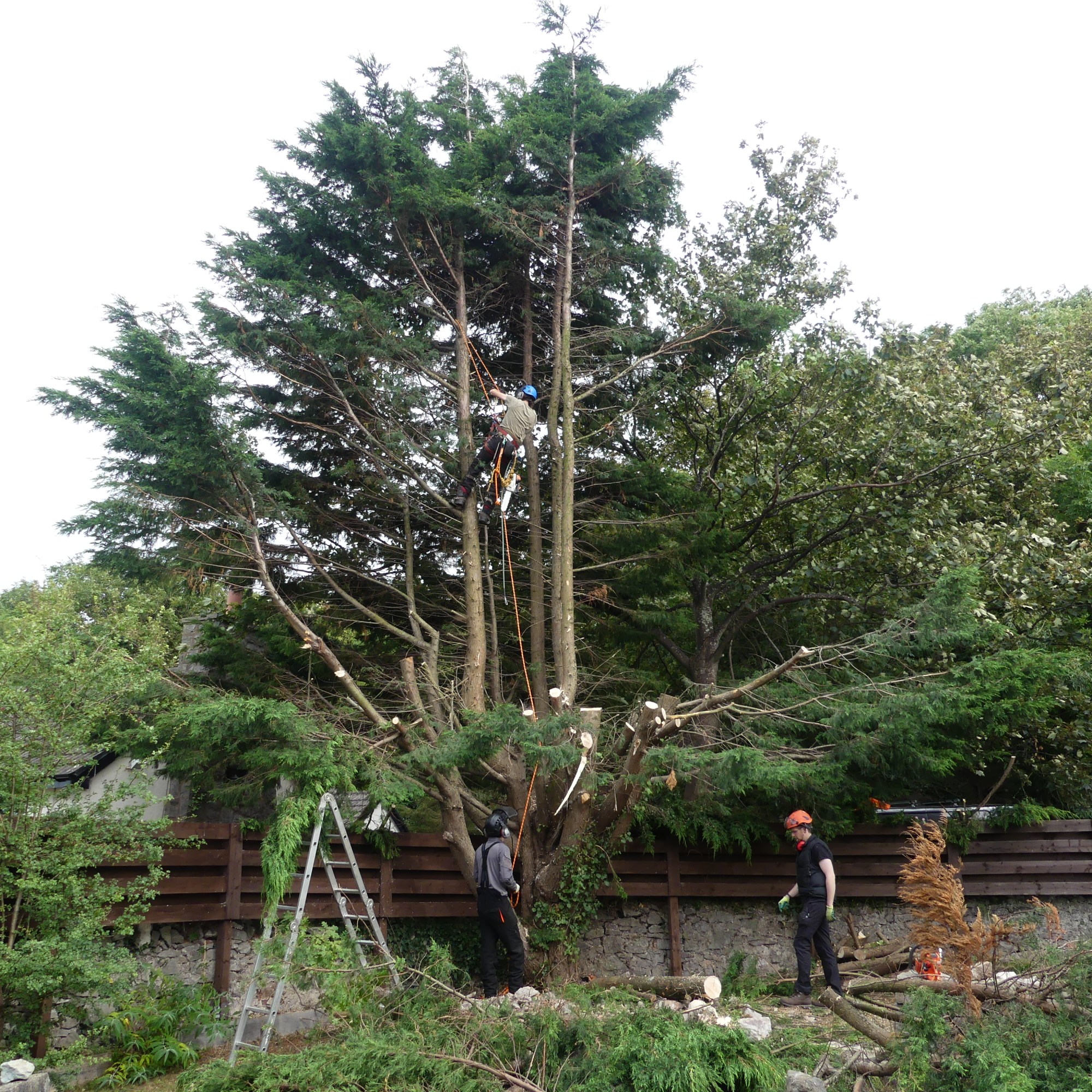
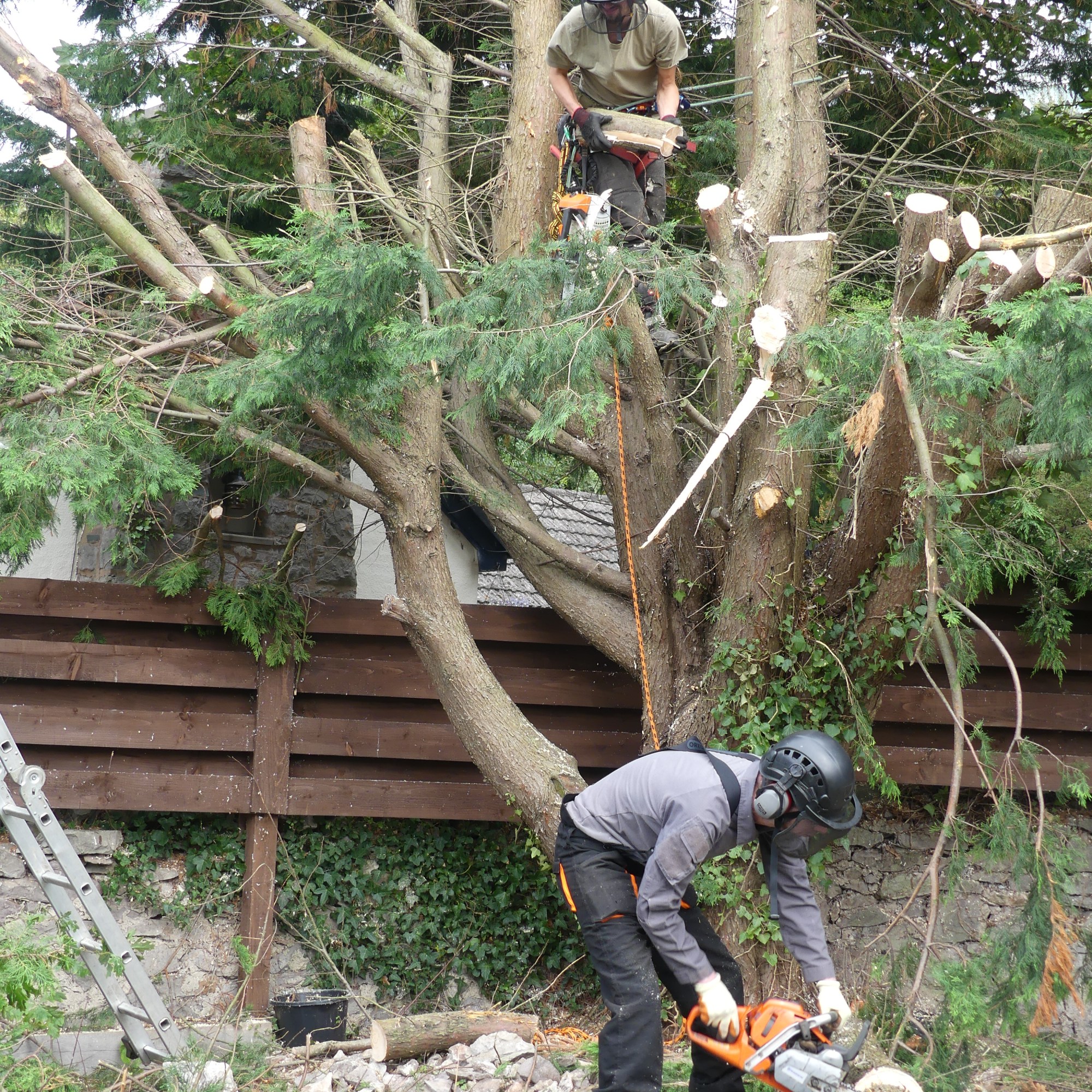
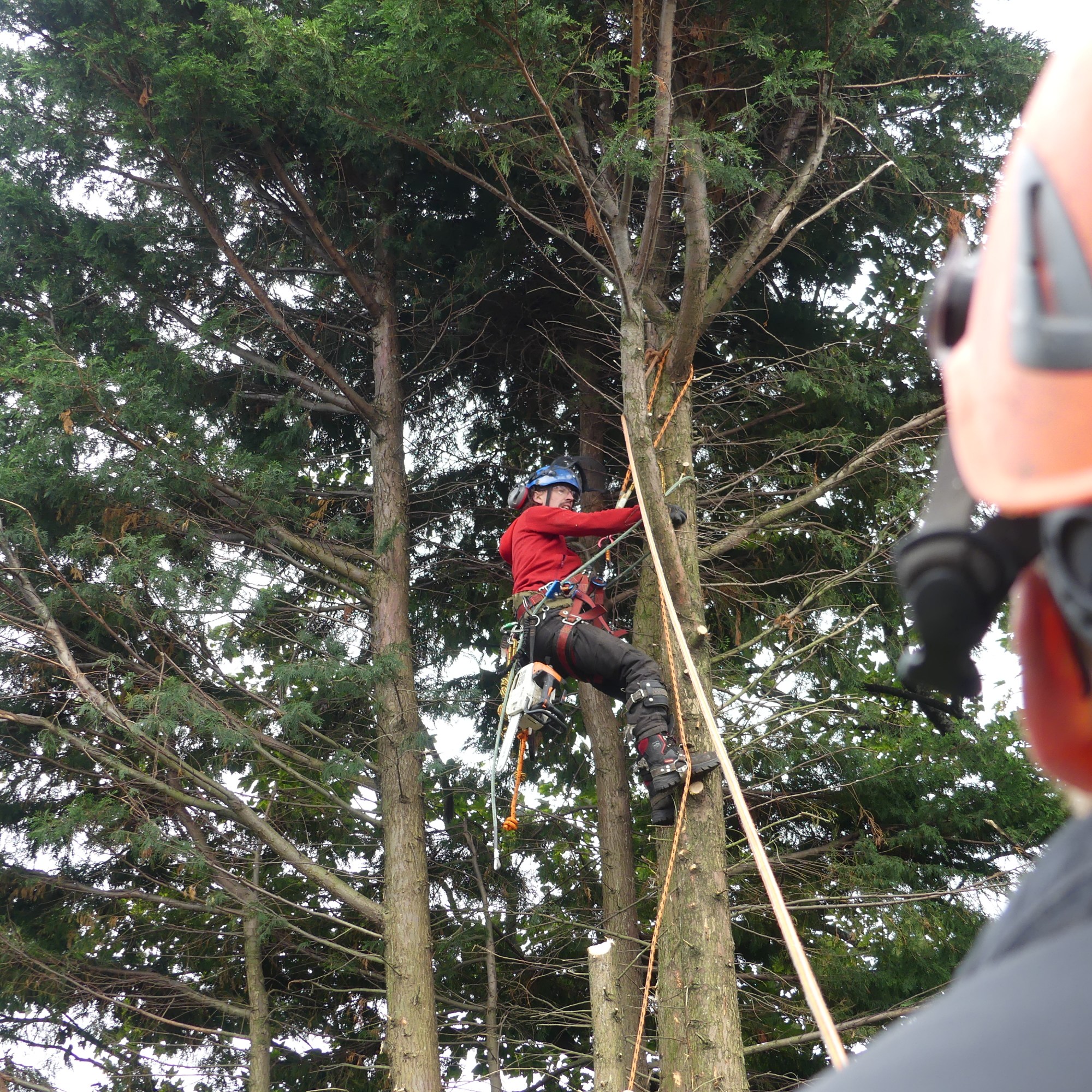
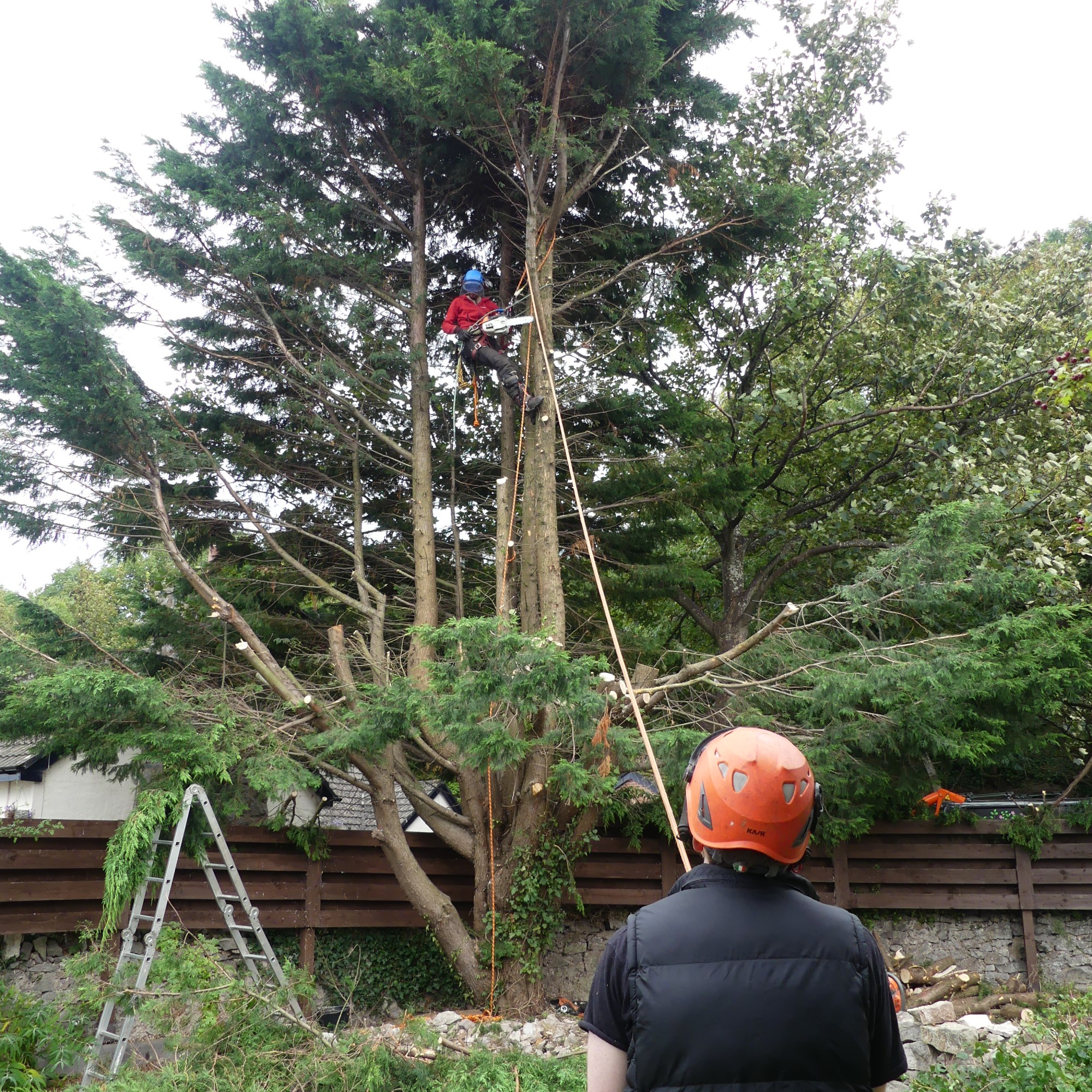
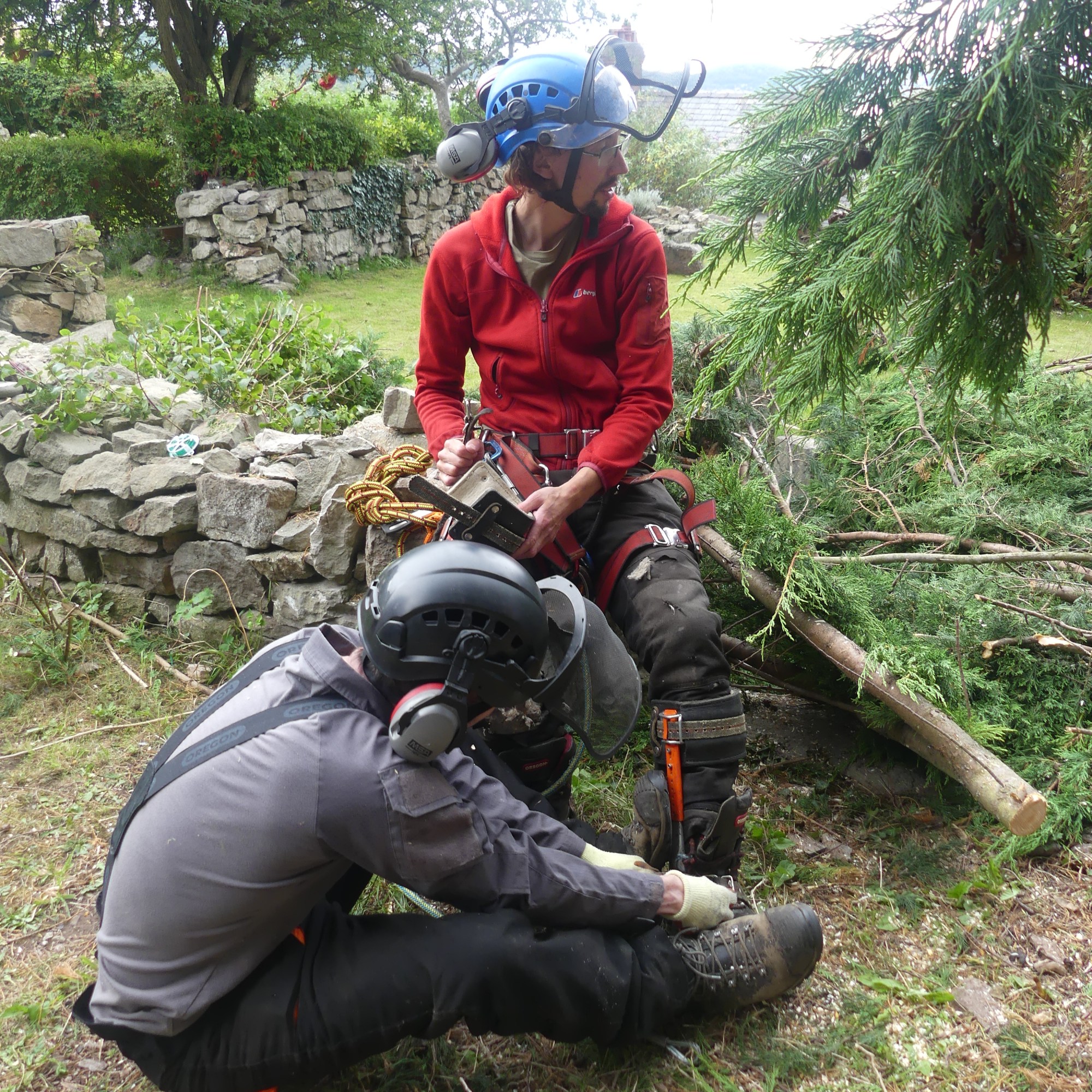
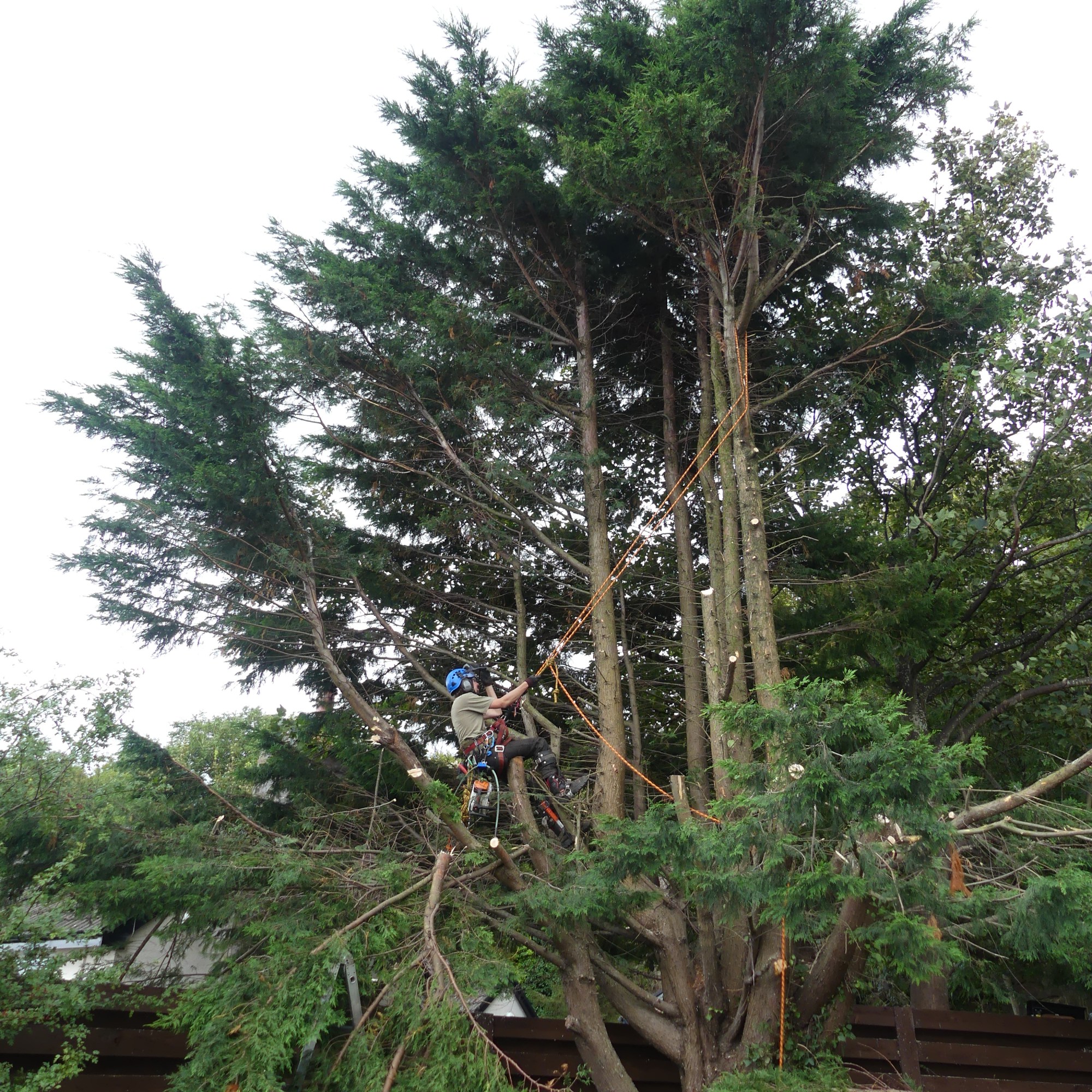
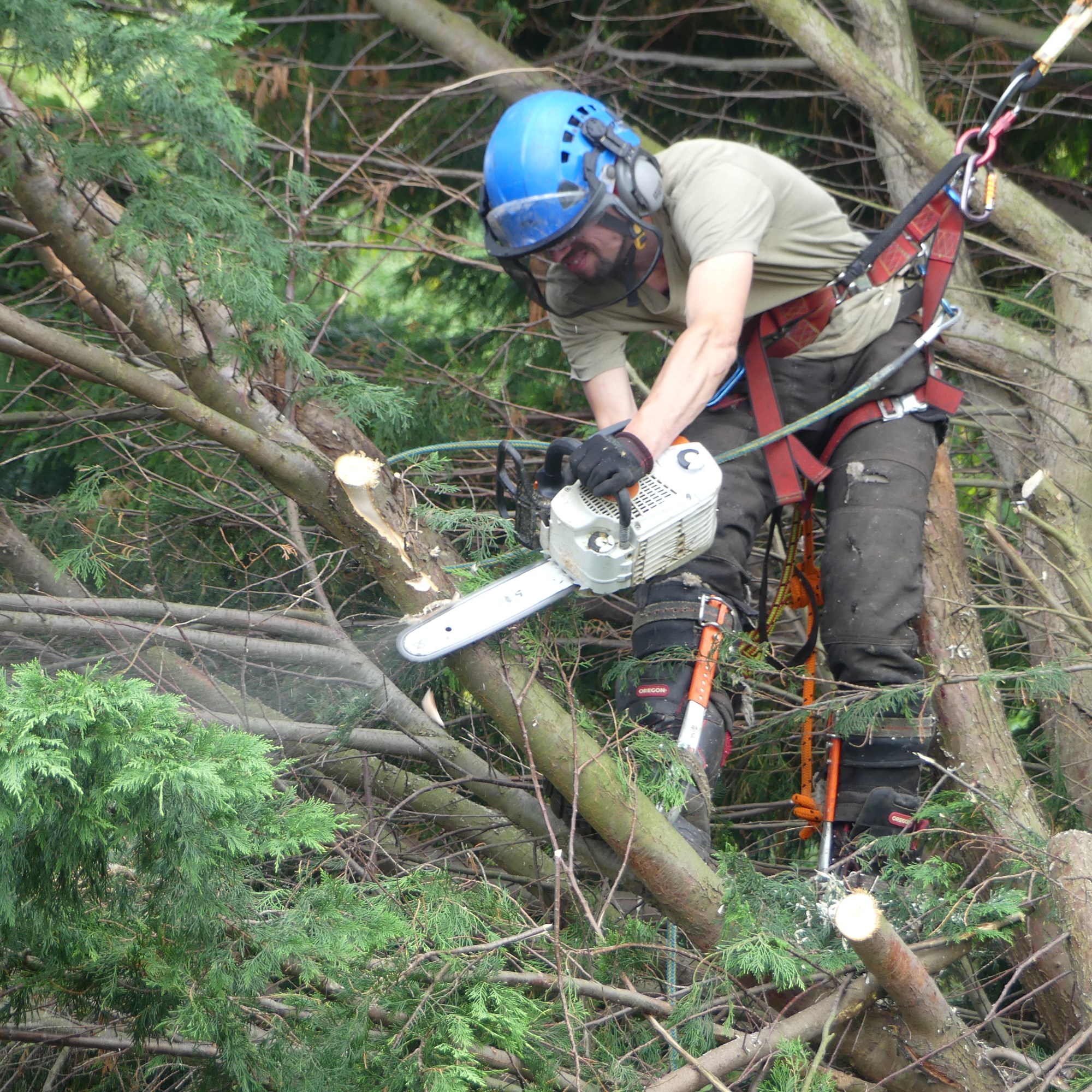
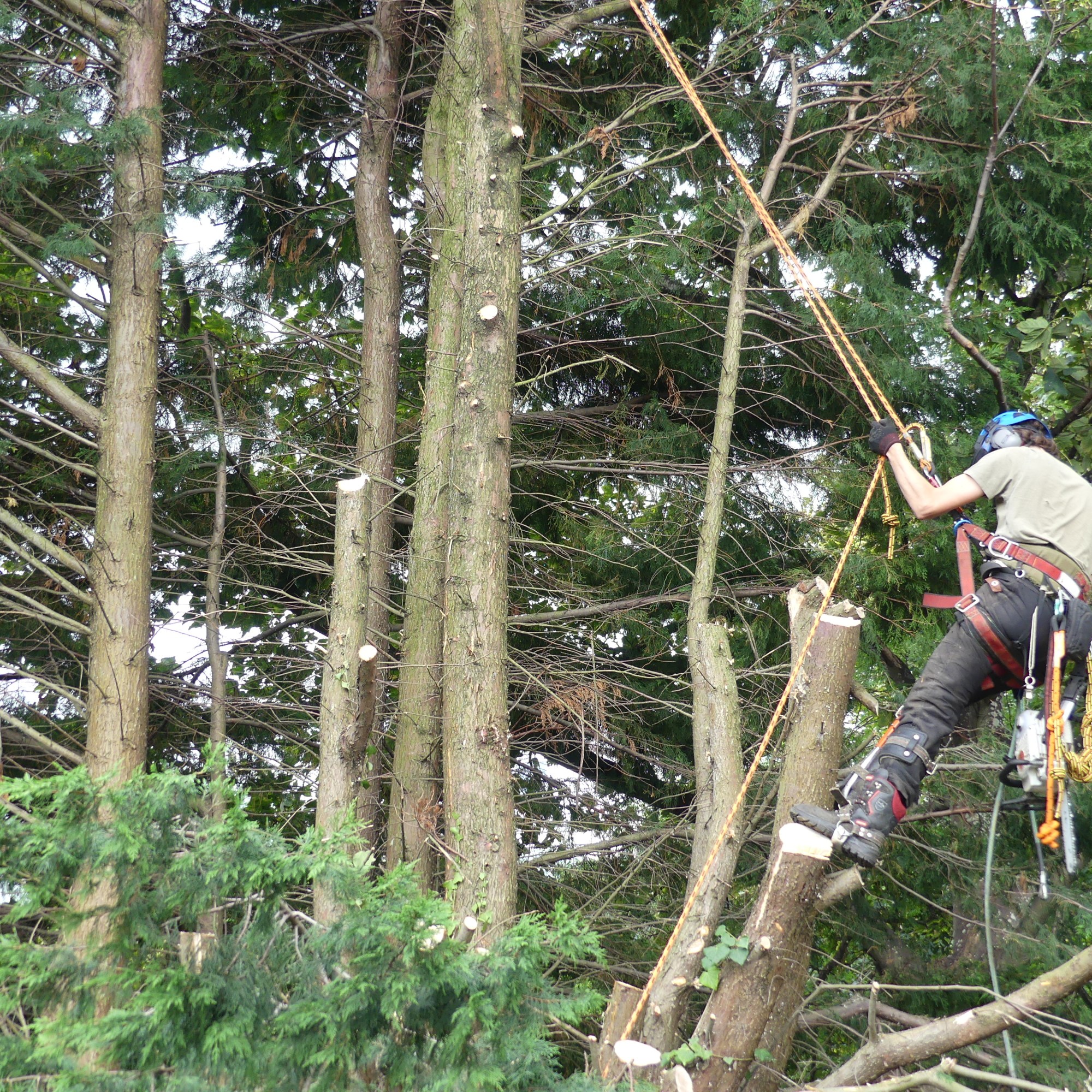
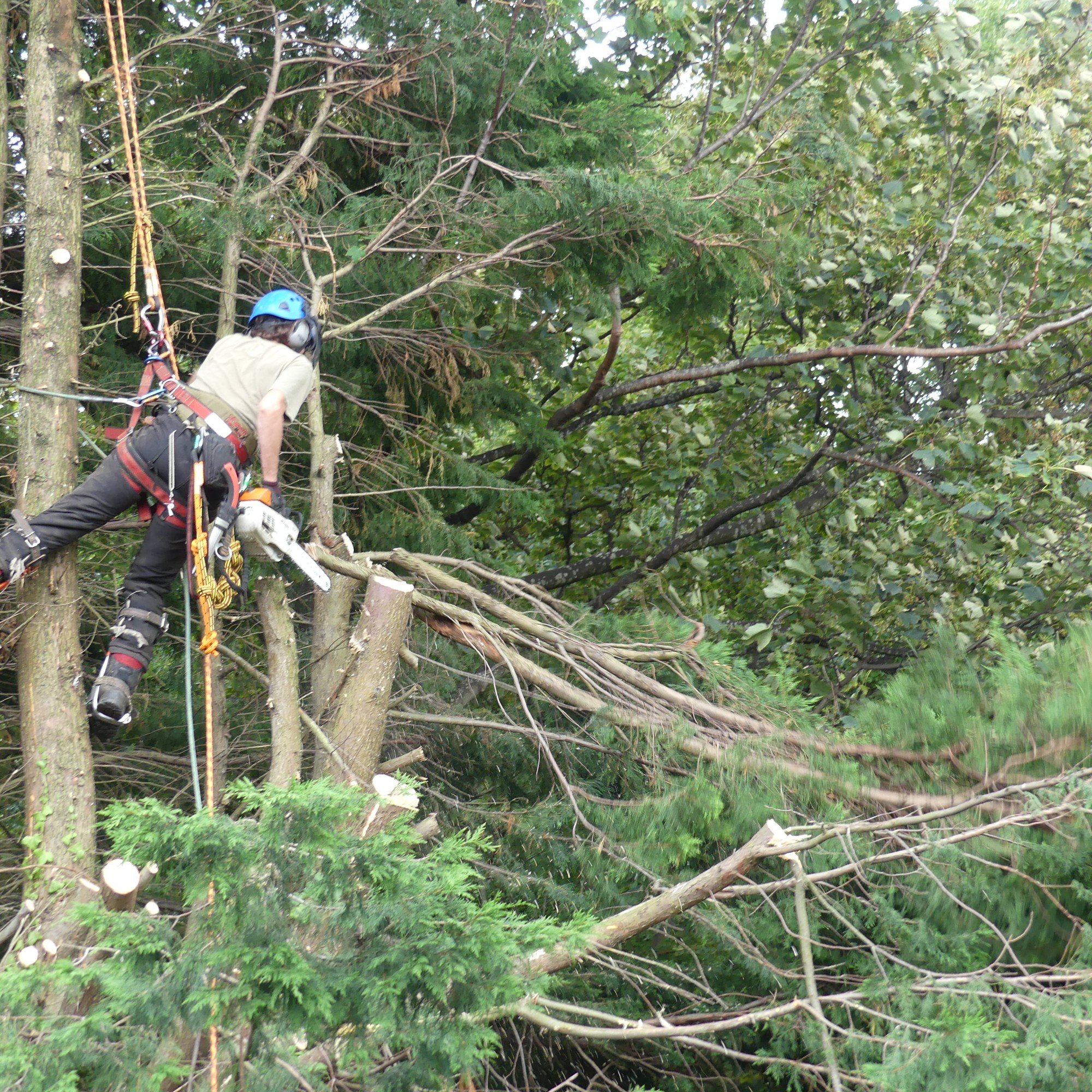
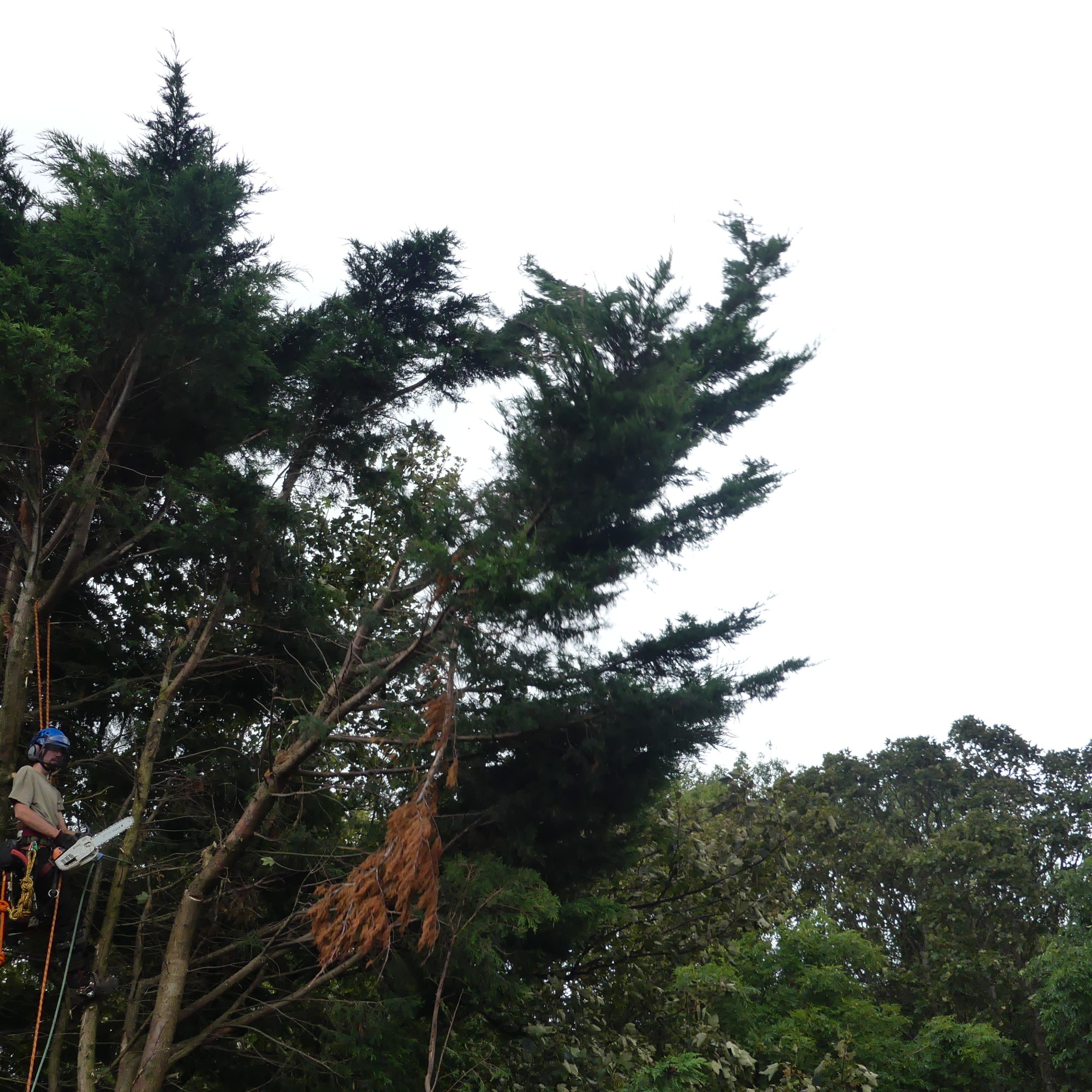
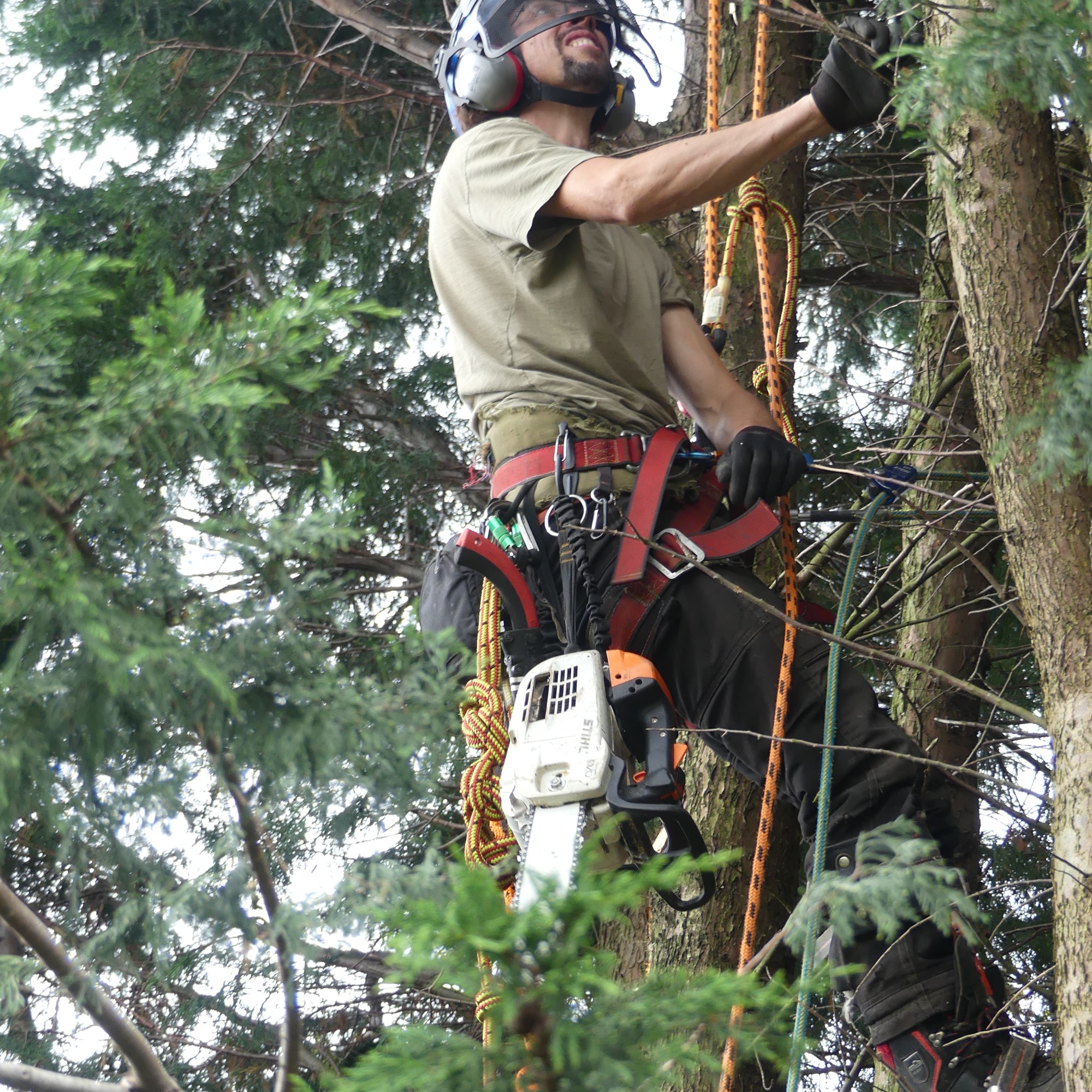
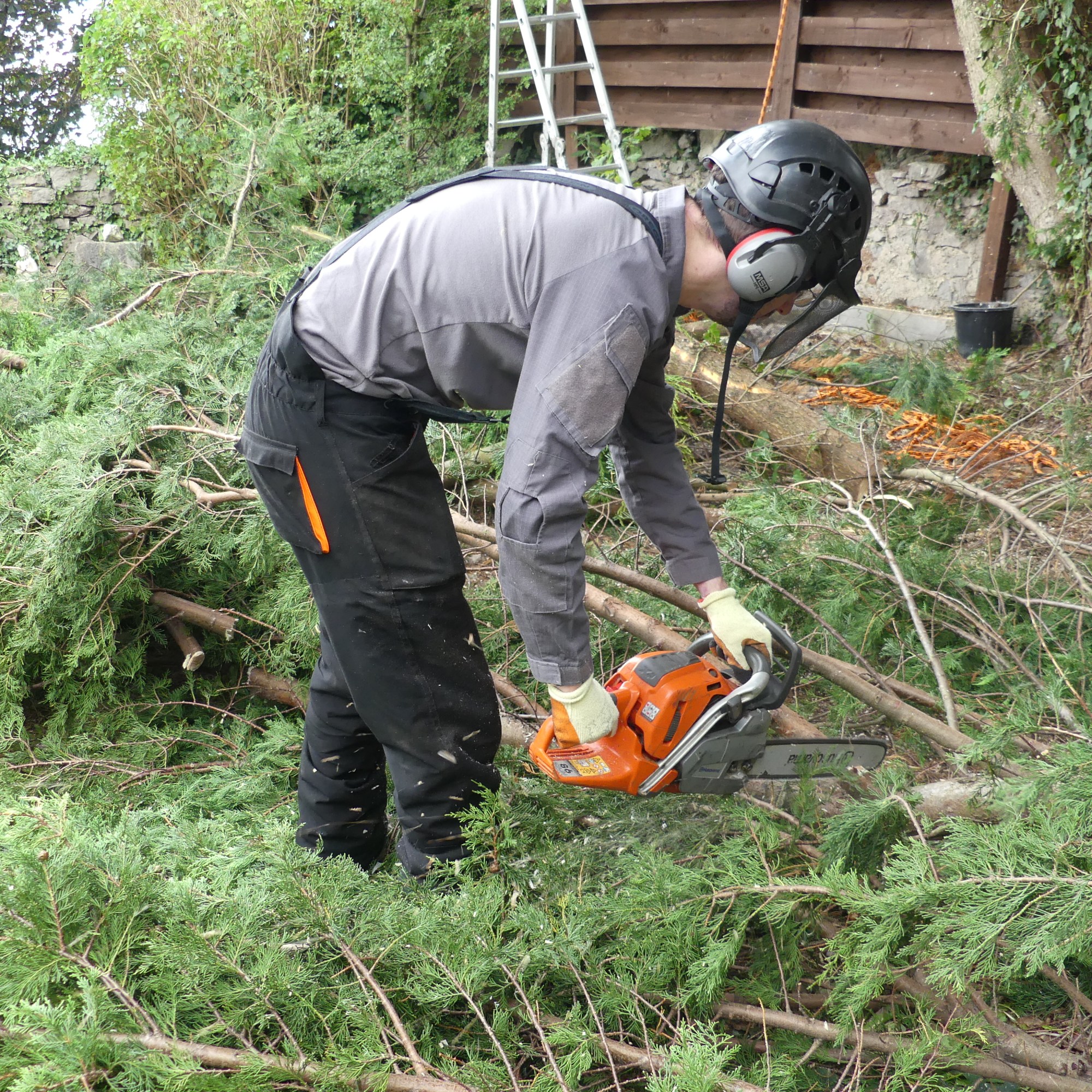
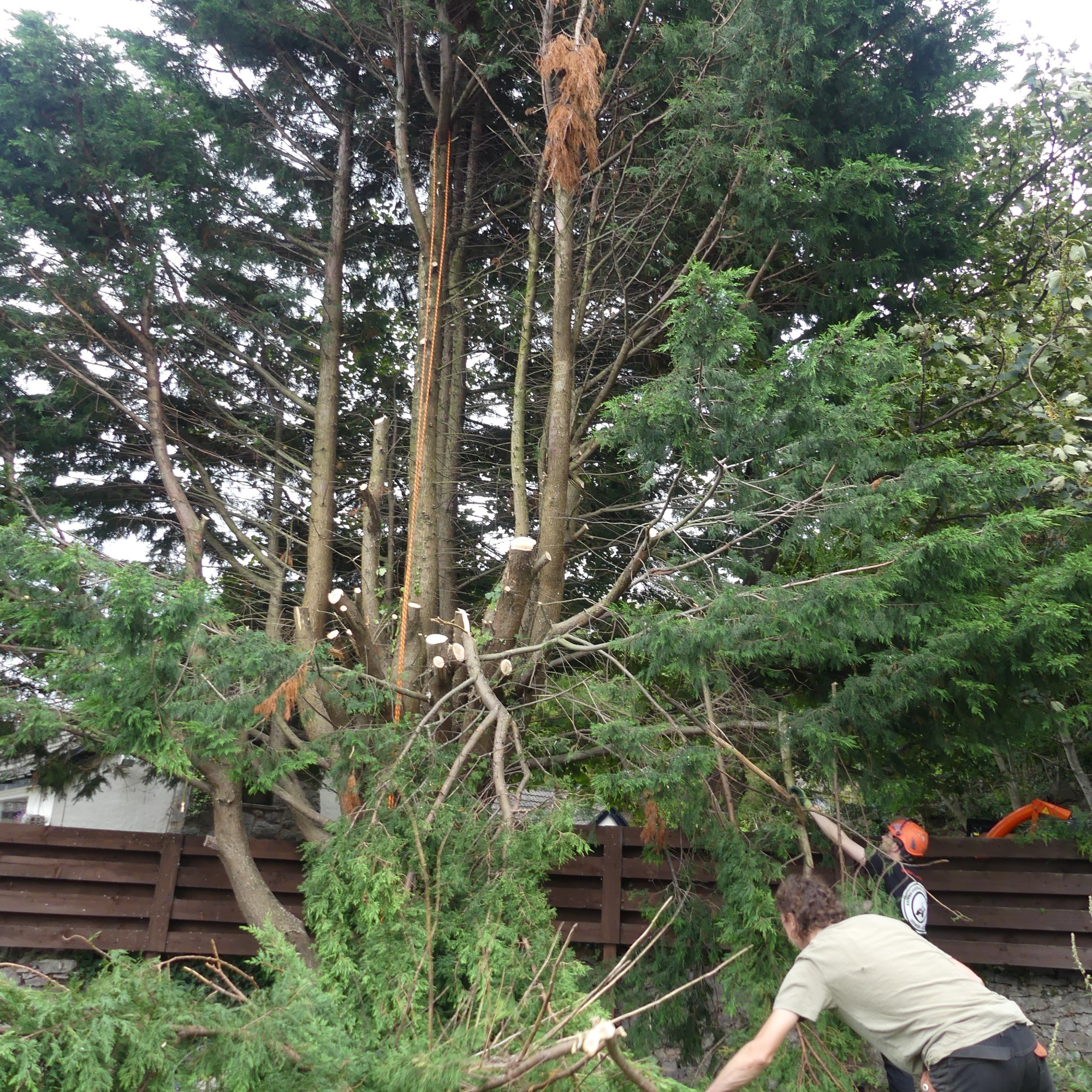
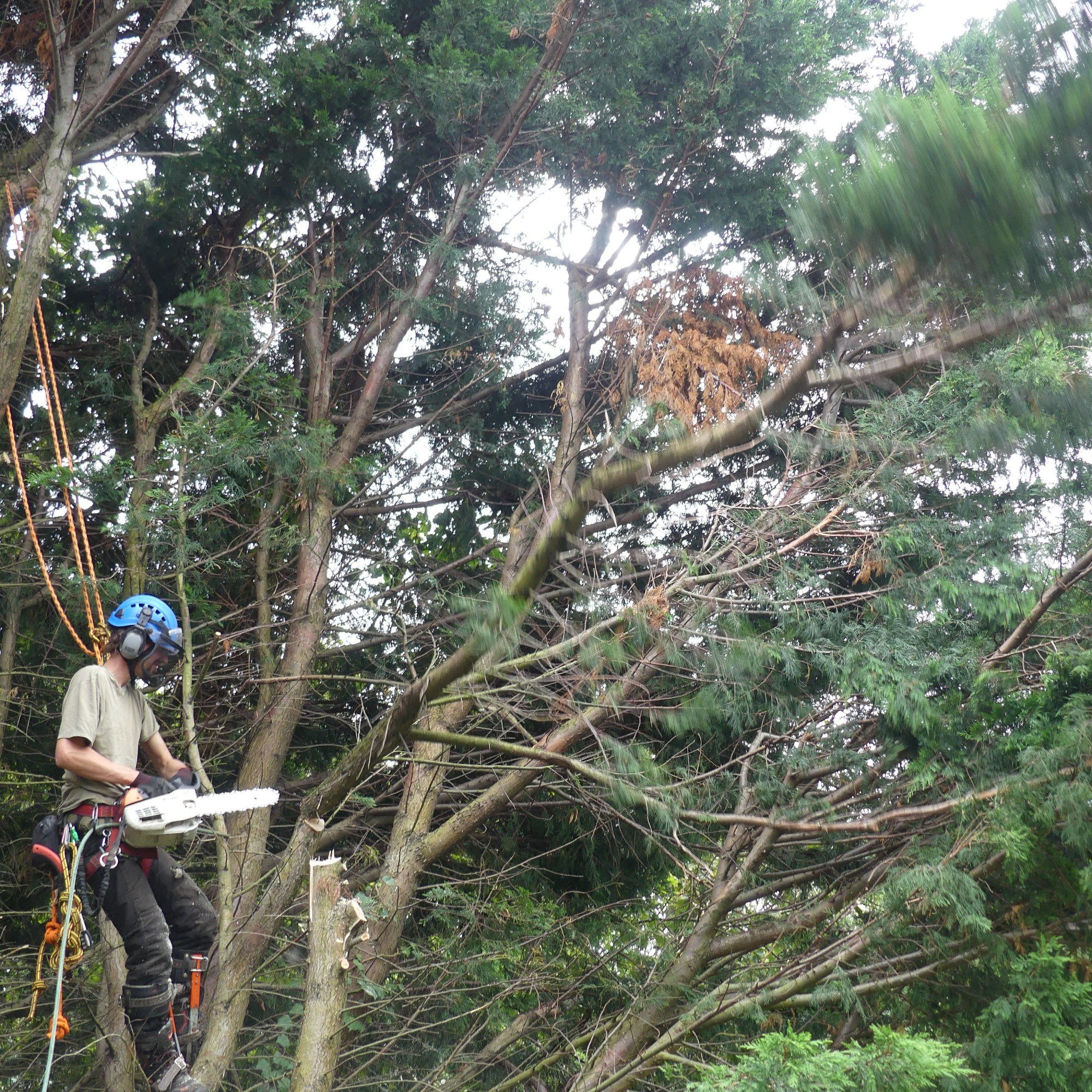
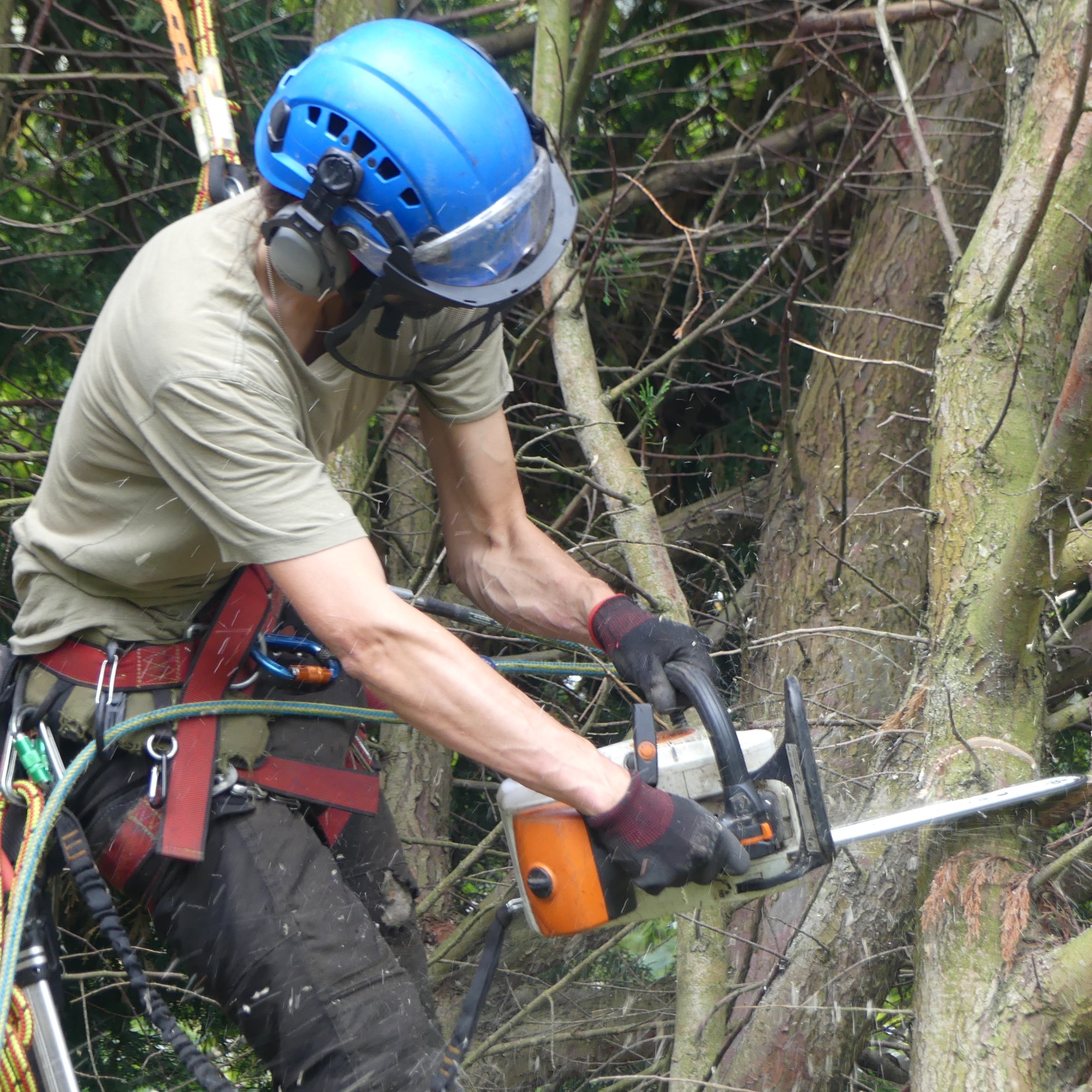
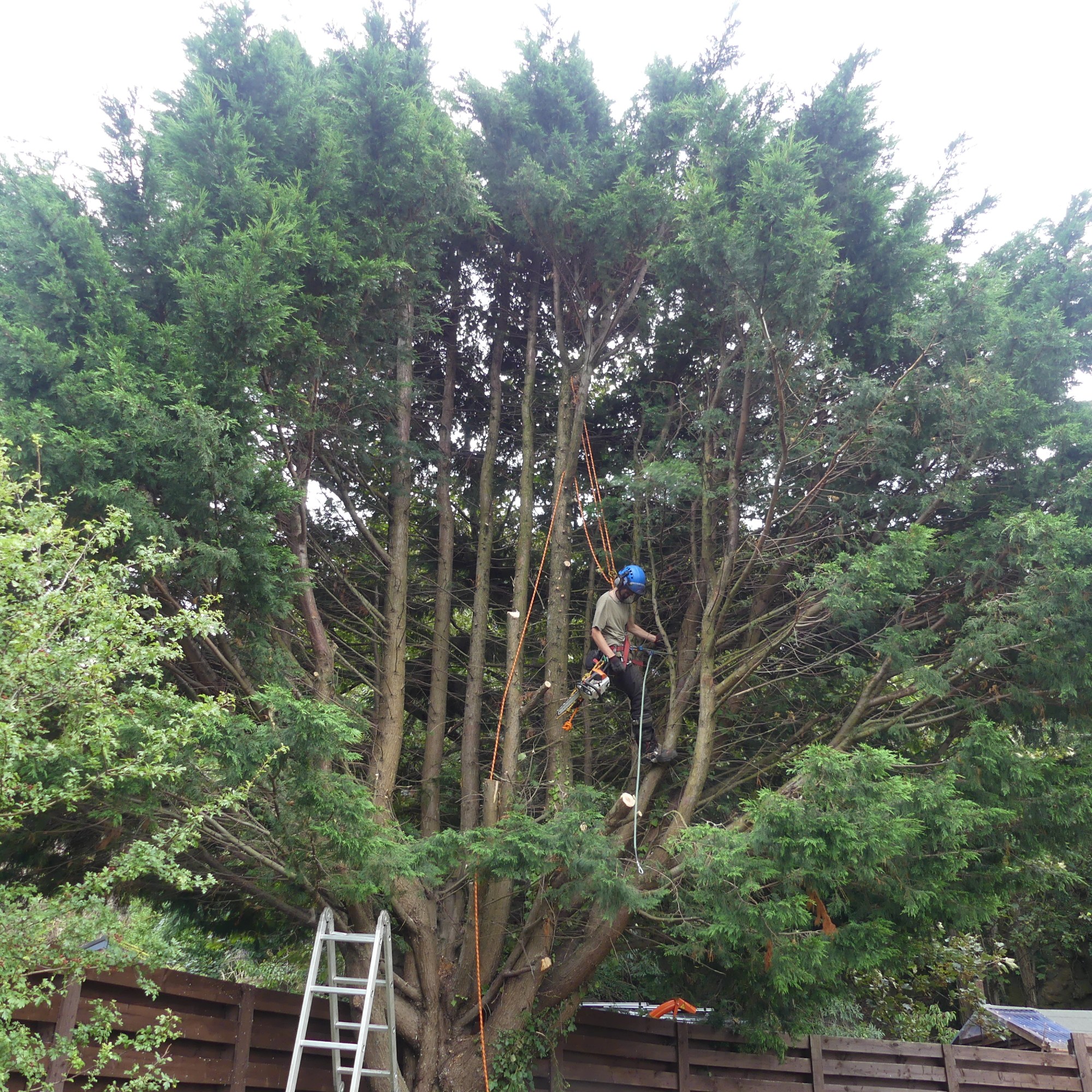
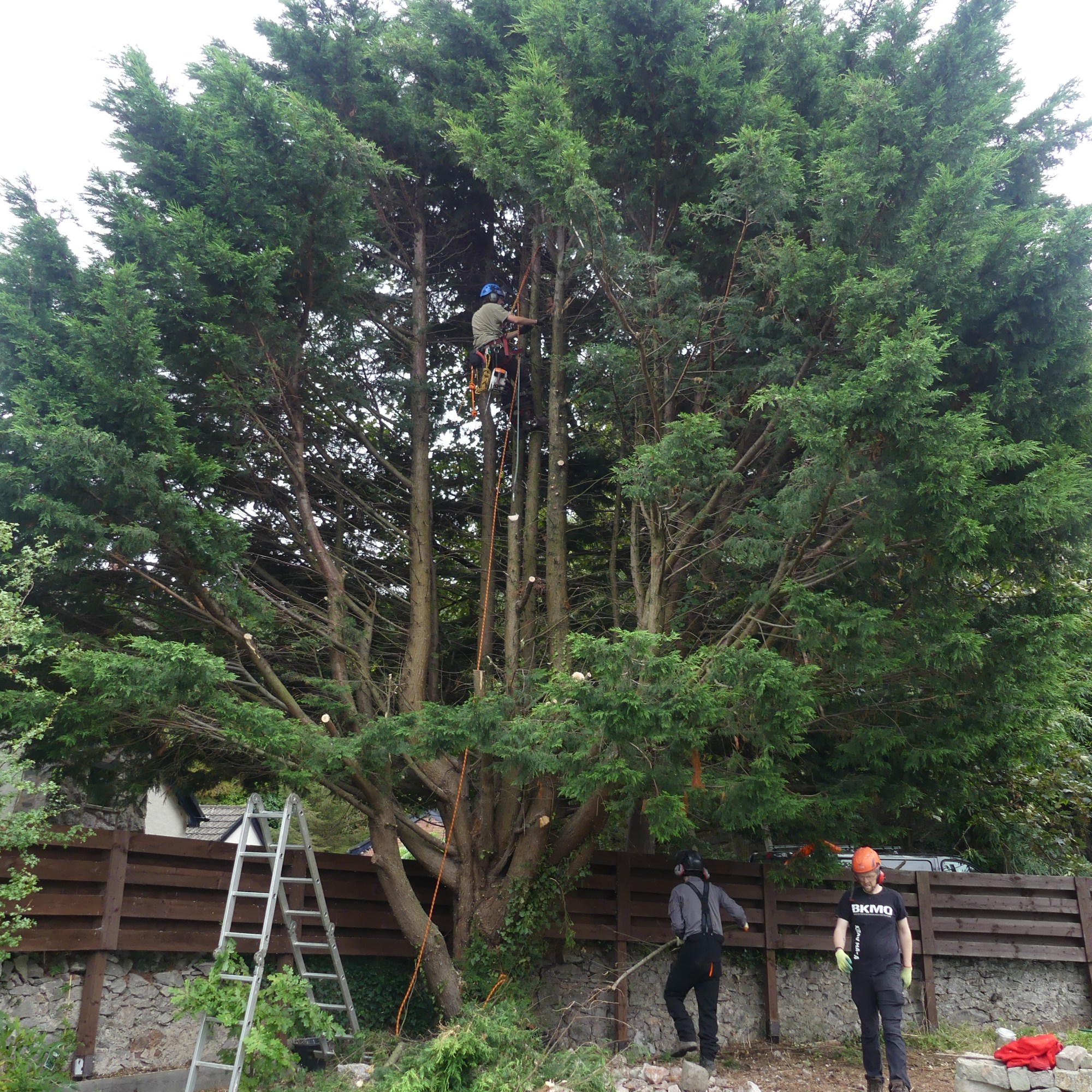
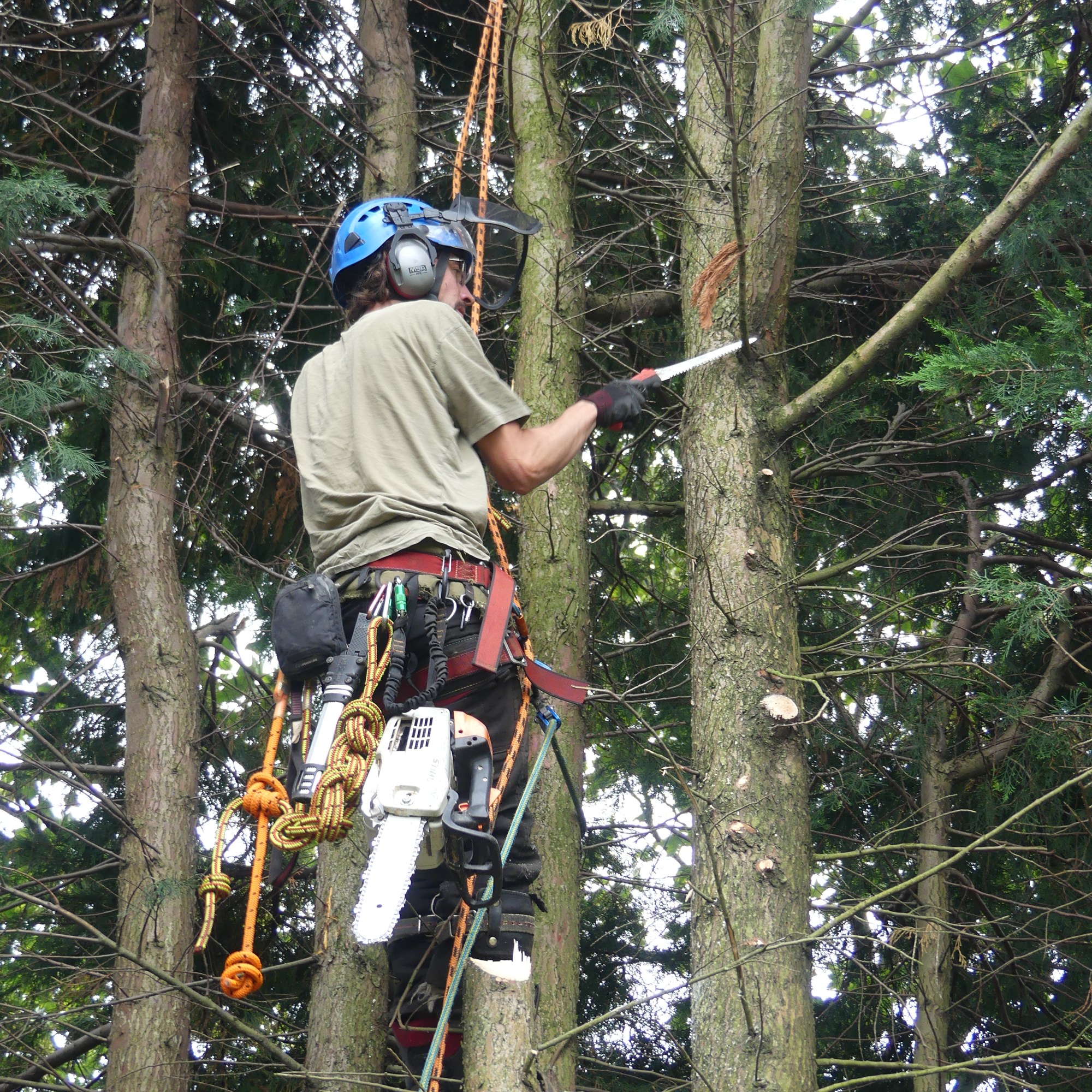
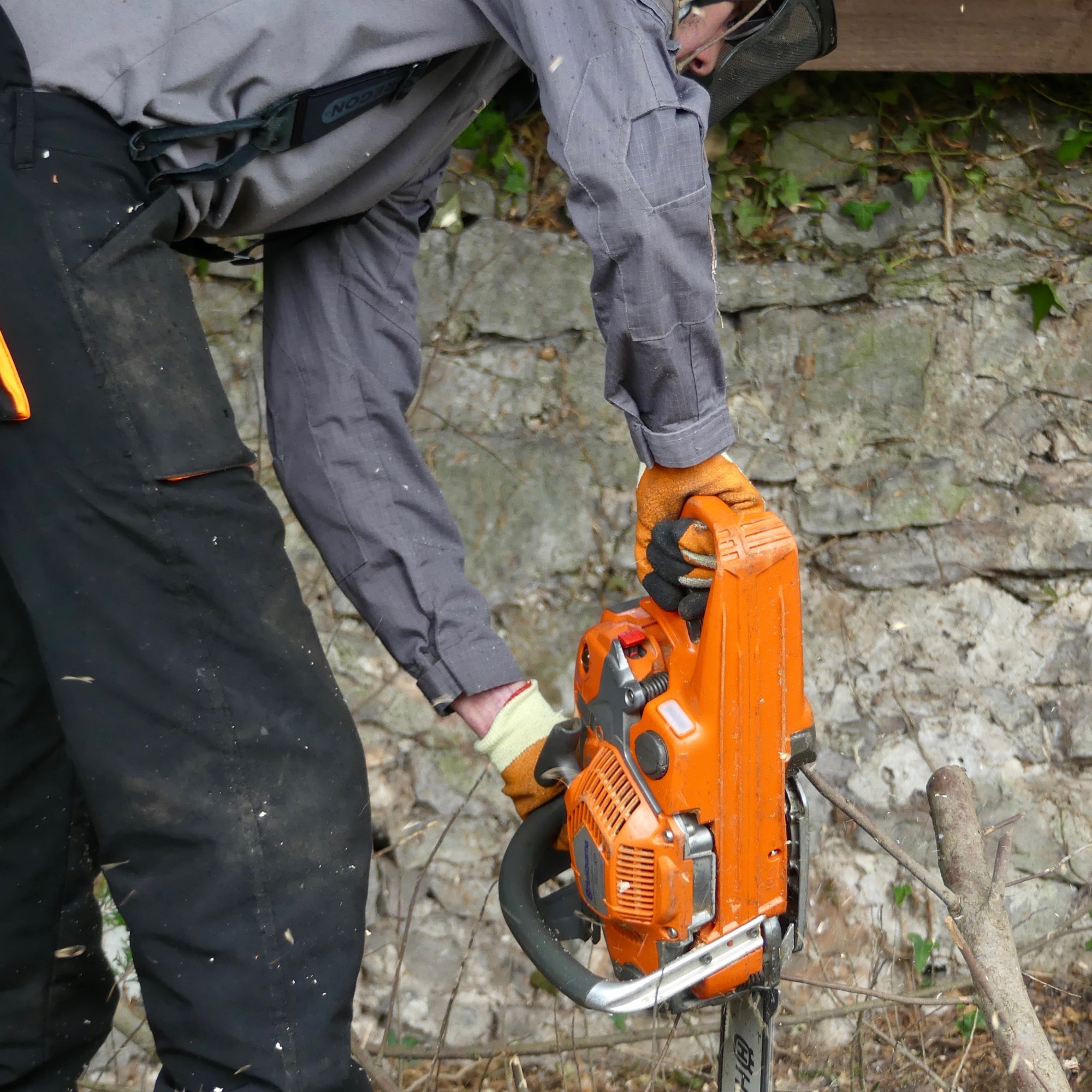
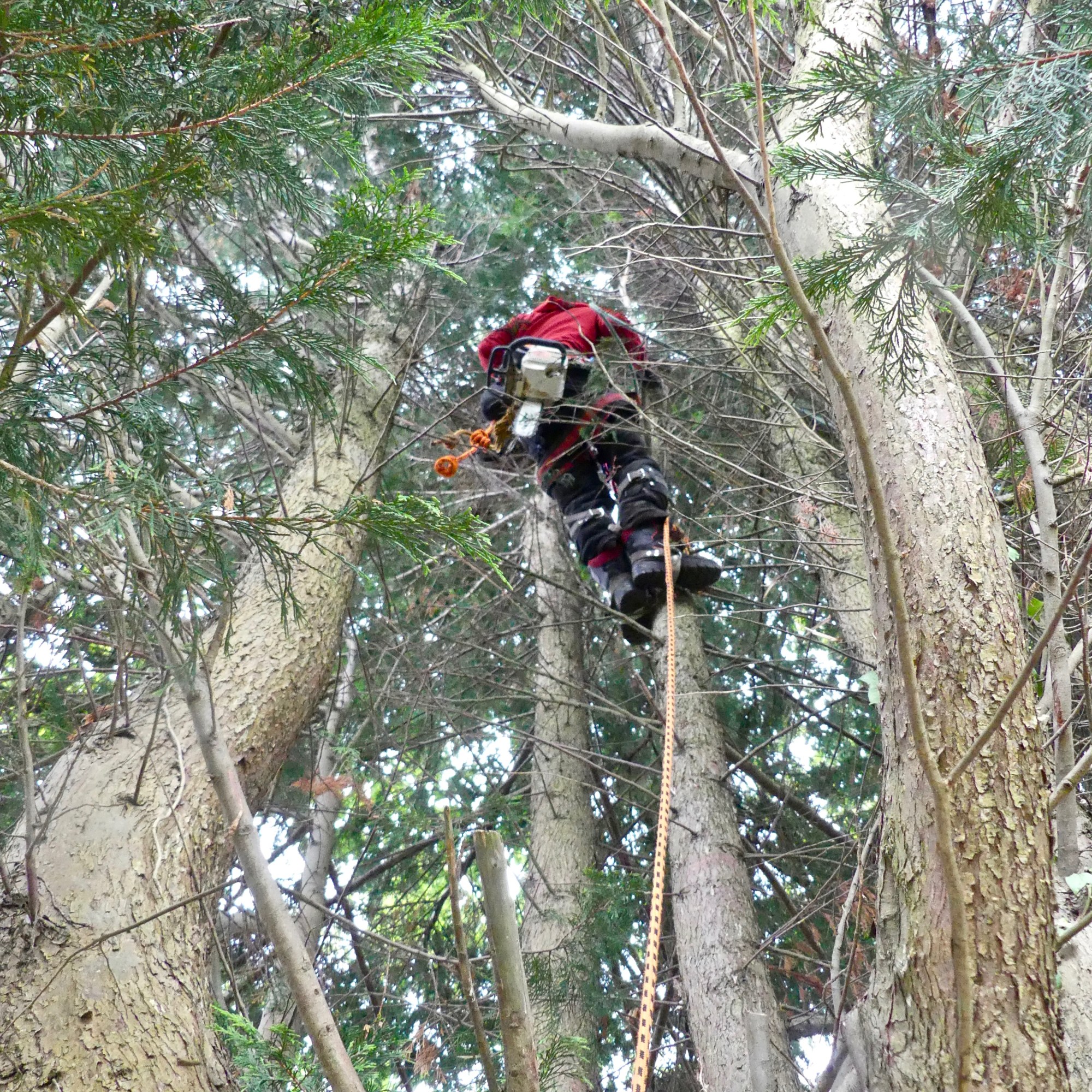
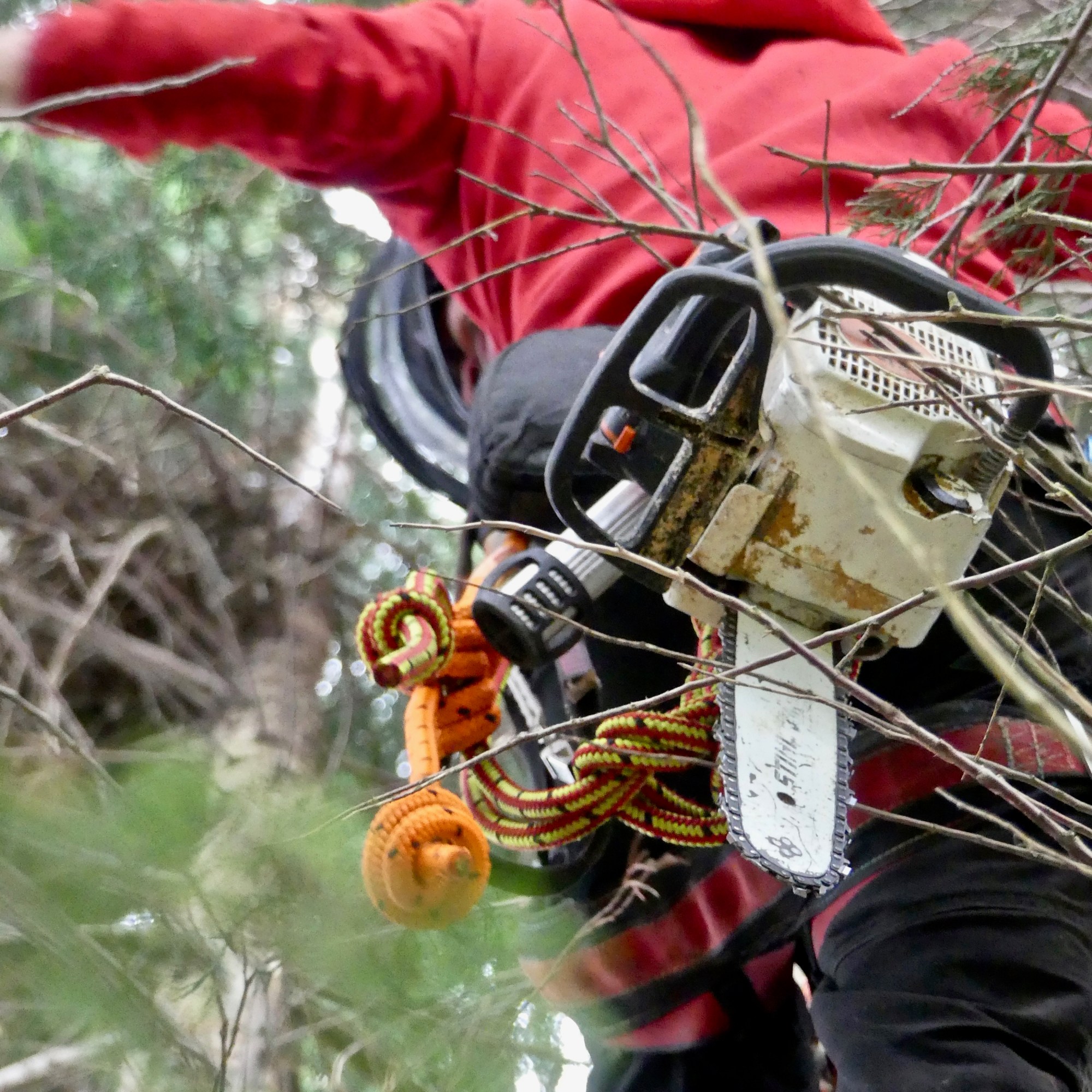
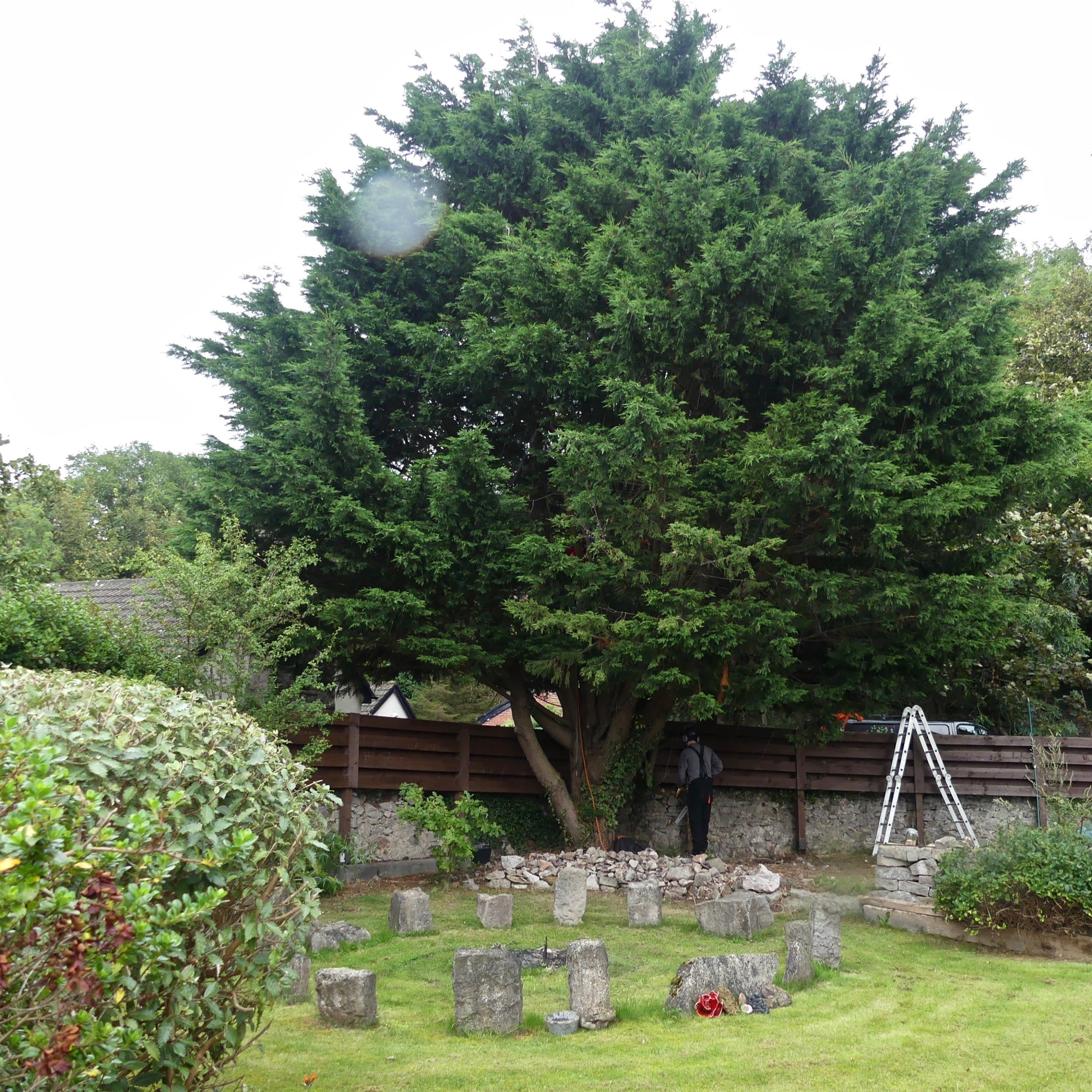
- Felling or dismantling – with or without stump removal (which we can organise), this may need aerial rigging and lowering of branches and/or sections where straight forward felling is not possible. See the leylandii dismantle below.
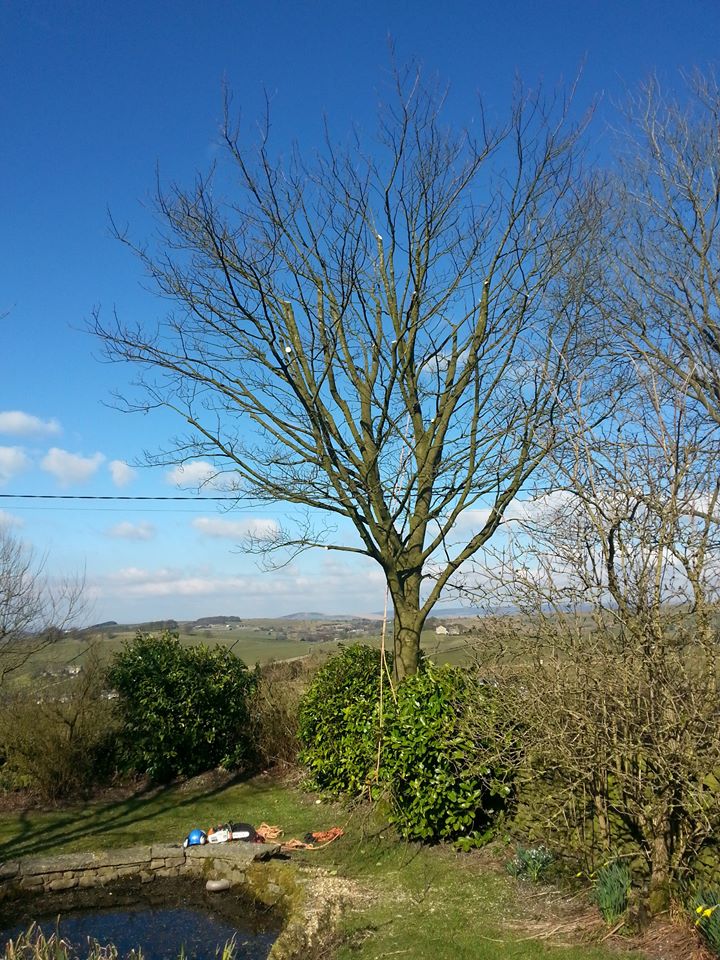
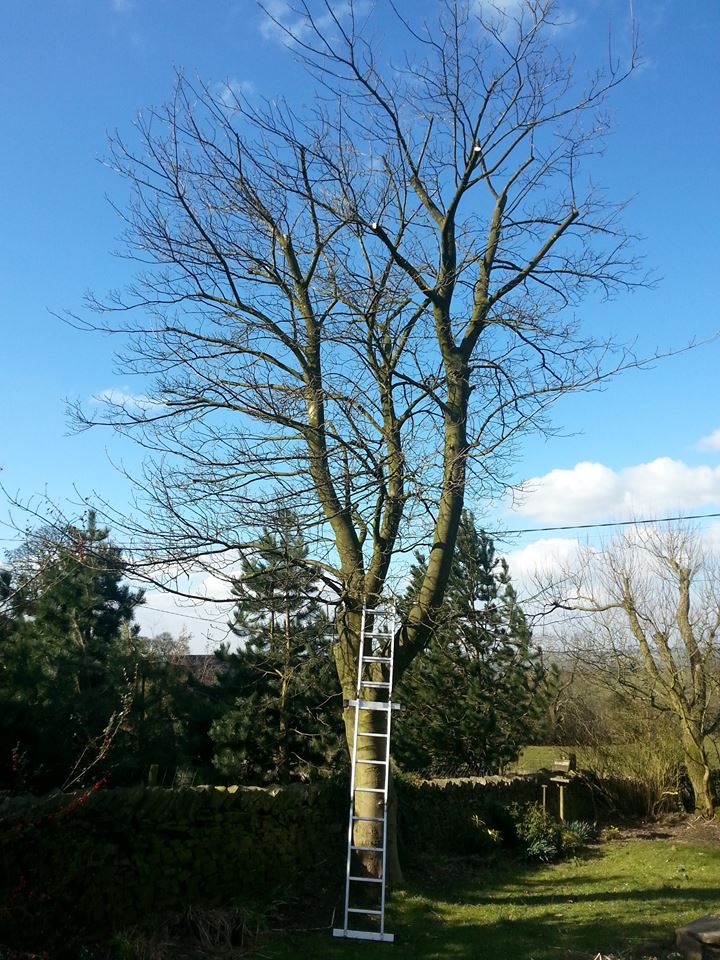
- Crown reduction – the crown of the tree is the leafy body, this can generally be reduced in size by up to 30% whilst leaving a good shape and structure. The two pictures below are crown reductions we performed on medium sized sycamore trees. Cutting at the branch unions minimises potential for vigorous regrowth.
- Crown thinning – this may be necessary to allow more light to penetrate a tree, or when the tree has become congested and overcrowded and perhaps diseased. This operation involves removing a portion of the branches of the crown to leave a good open structure, with good light penetration and air flow through the tree.
- Pruning and crown raising – selected branches may need removing, and if the all the lower branches are removed to a certain height, this is termed ‘raising the crown’ of the tree.
- Pollarding – this type of hard pruning originated from fields with livestock, where trees were periodically pruned for firewood, above grazing height. Here the tree is cut down to the main stem(s) at a specified height. In amenity pollarding, the tree is regularly pruned back to a major branch structure. Both are more extreme methods for controlling the size of an overgrown tree. Once pollarding is done, trees will often need re-pollarding periodically say every 2-5 years, due to vigorous regrowth.
These operations may be done in stages, over a long period, such as 3 years. This reduces the chance of harm to the tree, in the case of more sensitive specimens.
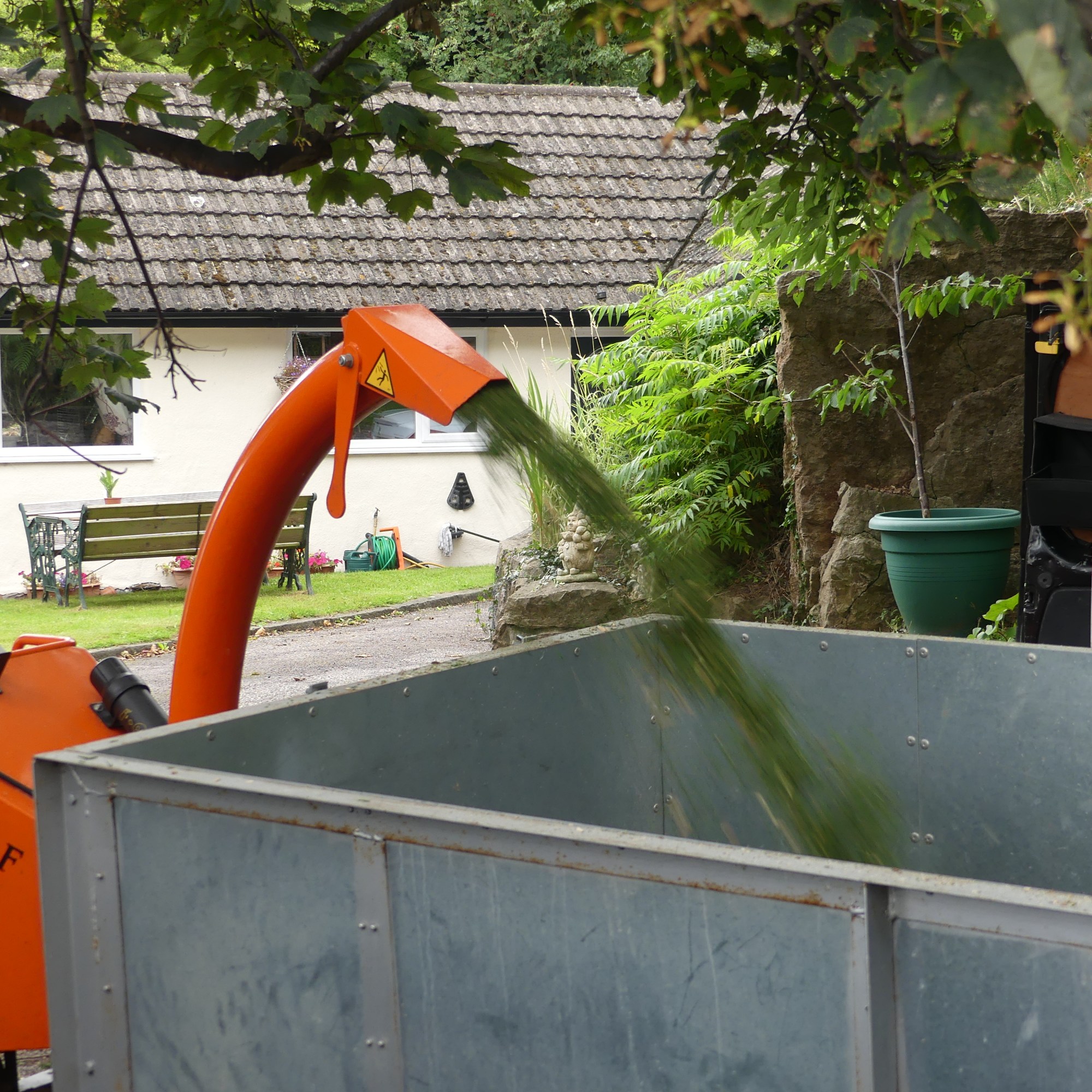
Dismantling an overgrown Leylandii [2019]
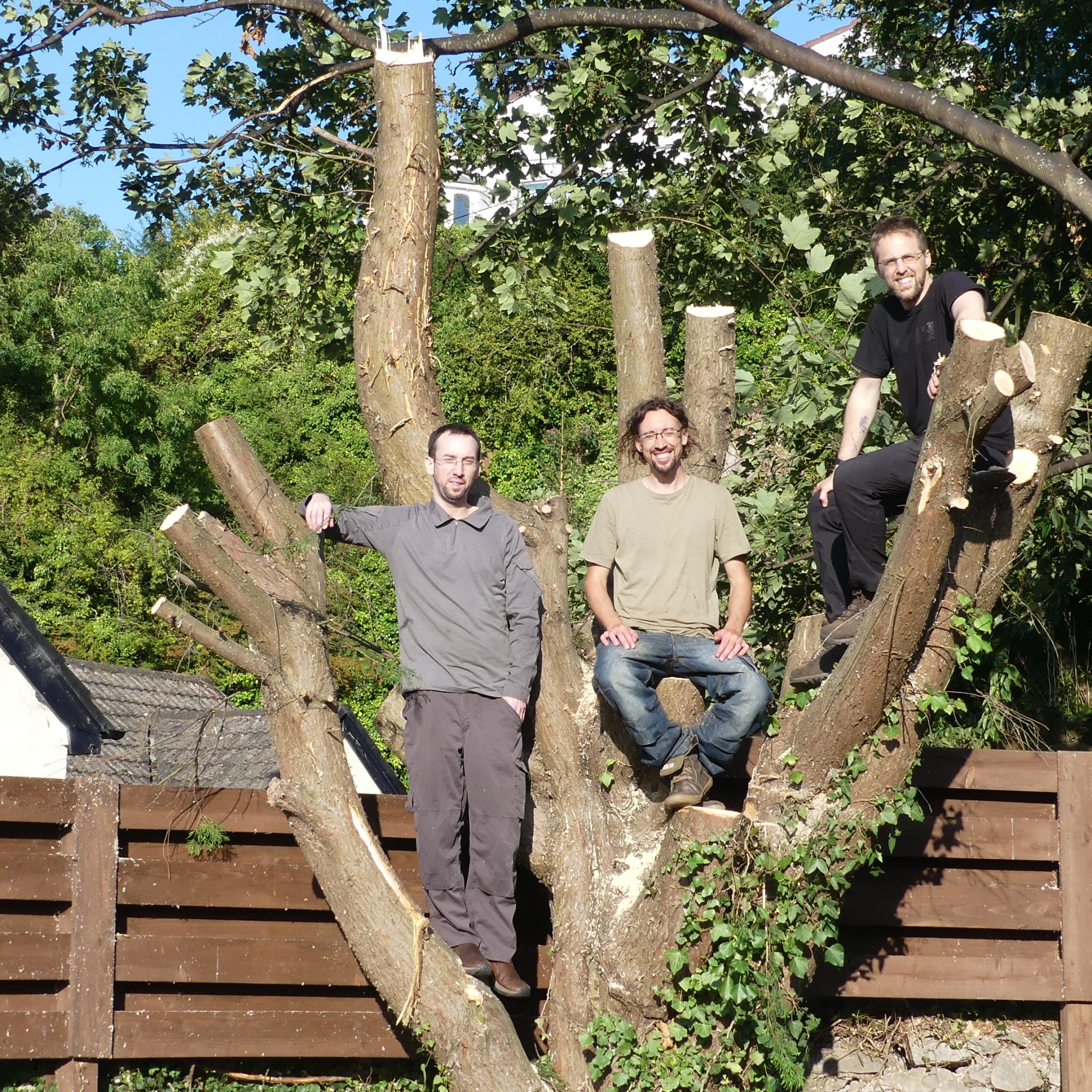


 Prunus Garden and Tree Services